A trading plan is a written set of rules that tells you what you trade, when you enter/exit, how much you risk, and how you review performance. This guide walks you through building a complete plan in 10 steps, then gives you a copy/paste template and two filled examples (day trading + swing trading).

What a trading plan is (and what it’s not)
A trading plan is the opposite of “winging it.”
It’s a written decision system that tells you:
- what you’re allowed to trade,
- what must happen before you enter,
- where you’re wrong (stop loss),
- where you’ll take profit (and how),
- how much you risk,
- and how you measure whether you’re improving.
Most traders don’t blow up because they’re “bad at trading.” They blow up because their decisions aren’t consistent. A solid plan turns trading from a string of emotional choices into a repeatable process.
Here’s the what confuses people:
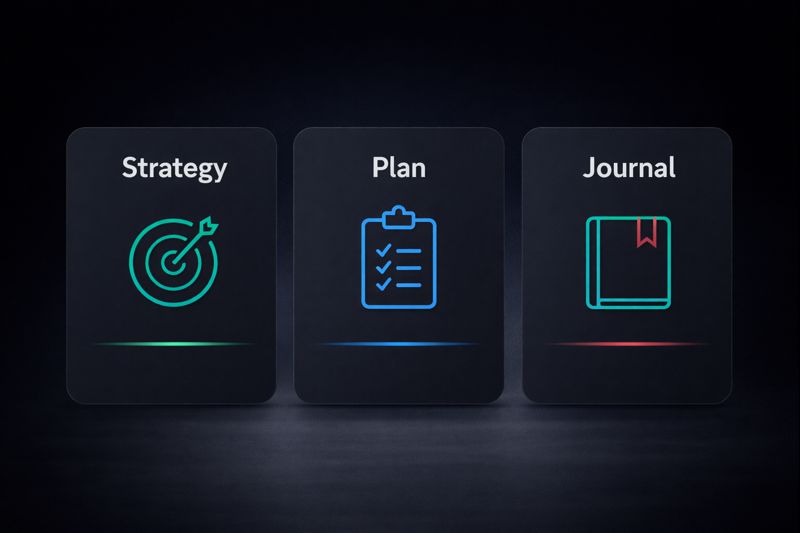
A strategy is just your method (your entry/exit logic).
A plan is the strategy plus risk rules plus a review routine.
A journal is the feedback loop that makes your plan smarter over time.
Why most traders “have a plan” but still break it
If you’ve ever said, “I knew I shouldn’t take that trade,” you already understand the real problem.
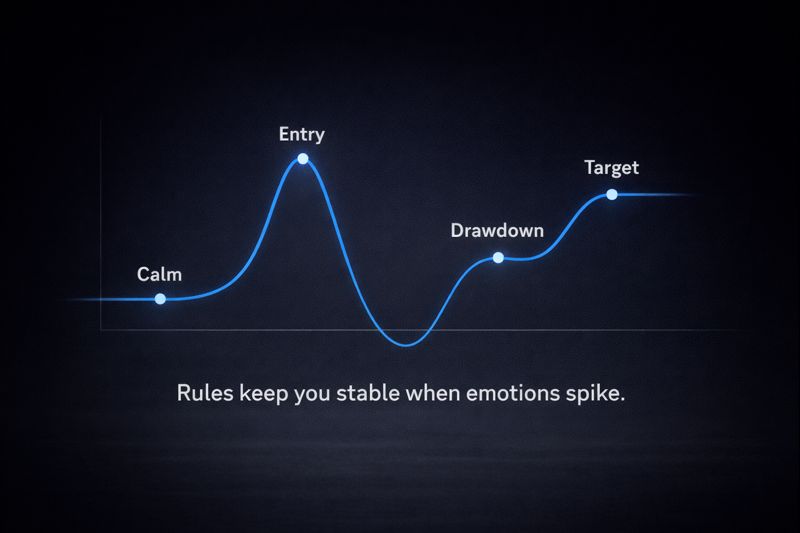
In calm moments, you can think clearly. In live markets, your brain wants relief: cut the loss early, take profit too soon, chase the move, get the money back. That’s normal.
The purpose of a trading plan isn’t to make you emotionless. It’s to remove decision-making from the moments when you’re most likely to make a bad decision.
A good plan feels almost boring. That’s a feature, not a bug.
The 10-step framework to build your trading plan
You’re going to build your plan like a checklist. Clear rules. Small scope. Minimal moving parts.
As you read, don’t aim for the “perfect” plan. Aim for a plan you can actually follow for 30 sessions straight. You can always refine it later.
Step 1: Define your goal
Most people write a profit goal. That’s not enough.
A serious trading plan starts with constraints, because constraints are what keep you in the game.
Your goal can be simple, but it should be real. For example: “Execute my rules consistently for the next 30 trading sessions.” That’s measurable. And it puts the focus on behavior, not fantasy.
Then add constraints that protect you from the two biggest account killers: overtrading and revenge trading.
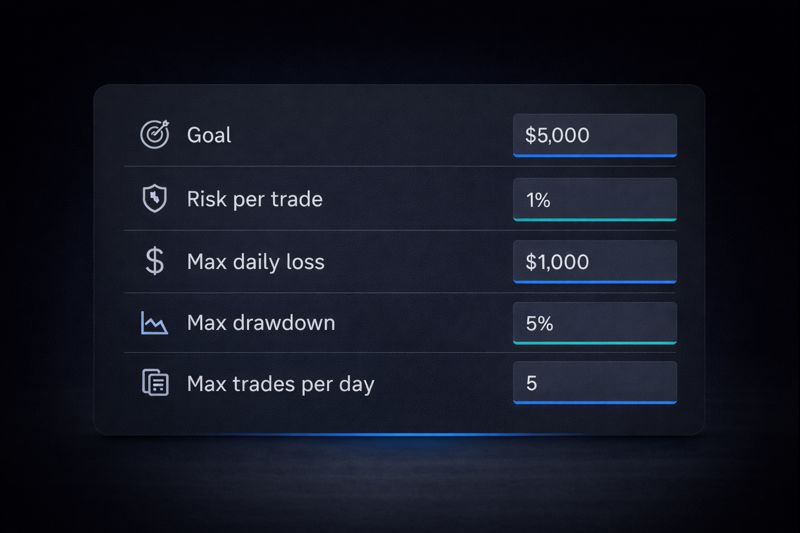
At minimum, define:
- your risk per trade (as a % or fixed amount),
- your max daily loss (in R or %),
- and your max drawdown where you stop and reassess.
When traders skip constraints, they end up “making rules” while they’re stressed. That’s how one bad trade becomes five.
Step 2: Choose a trading style that fits your life
The best trading style is the one you can execute consistently.
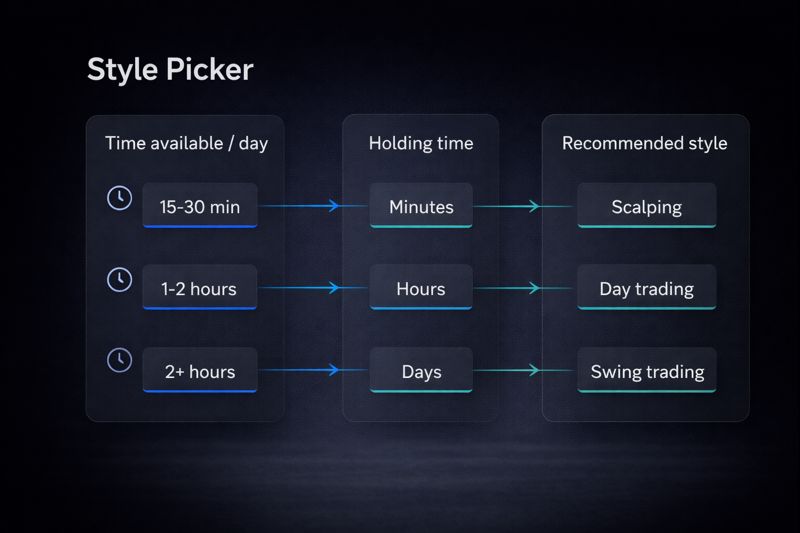
Day trading looks exciting, but it demands fast decisions and screen time. Swing trading is slower, but it demands patience and comfort with holding overnight. Position trading is even slower, but it demands a bigger-picture mindset.
Pick the style that matches your schedule, not your ego.
If you can only check charts once per day, a day trading plan will slowly turn into random trading. You’ll miss entries, chase moves, and bend rules “just this once.”
A plan that fits your life creates consistency almost automatically. A plan that doesn’t fit your life forces you to rely on motivation—and motivation is unreliable.
Step 3: Choose your market and keep your watchlist small
A common mistake is building a plan for “everything.”
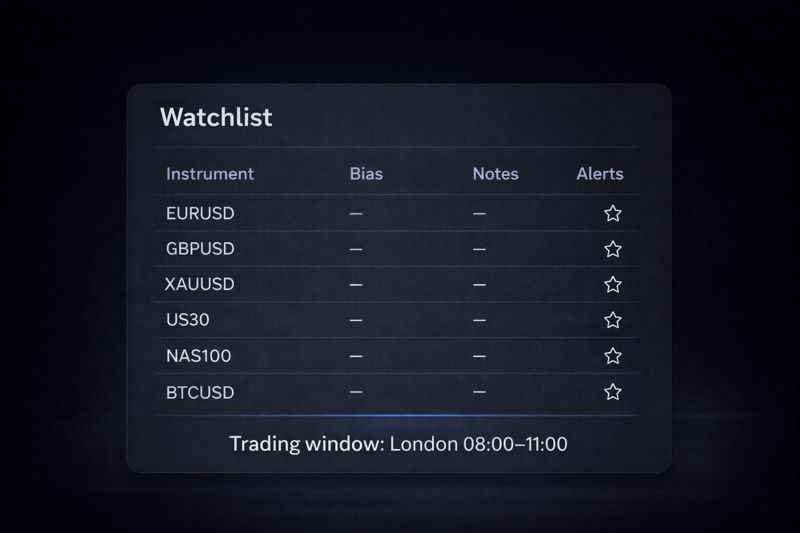
Different markets behave differently. Volatility, liquidity, sessions, news impact—these change the way your strategy performs. If you’re looking at 30 instruments across multiple markets, you aren’t building skill. You’re building noise.
Start with one market type and a small instrument list.
This does two important things:
- It makes your learning curve steeper (in a good way). You see the same patterns repeatedly.
- It makes your results easier to diagnose. If something’s wrong, you can actually find the cause.
Also define your trading window. Many traders lose money simply by trading at times when the market is thin, choppy, or unpredictable for their style.
Step 4: Define your setup (your edge)
Your setup needs to be recognizable and repeatable.
If you can’t explain your setup simply, you won’t execute it consistently. You’ll start seeing “almost setups” everywhere. That’s how overtrading begins.
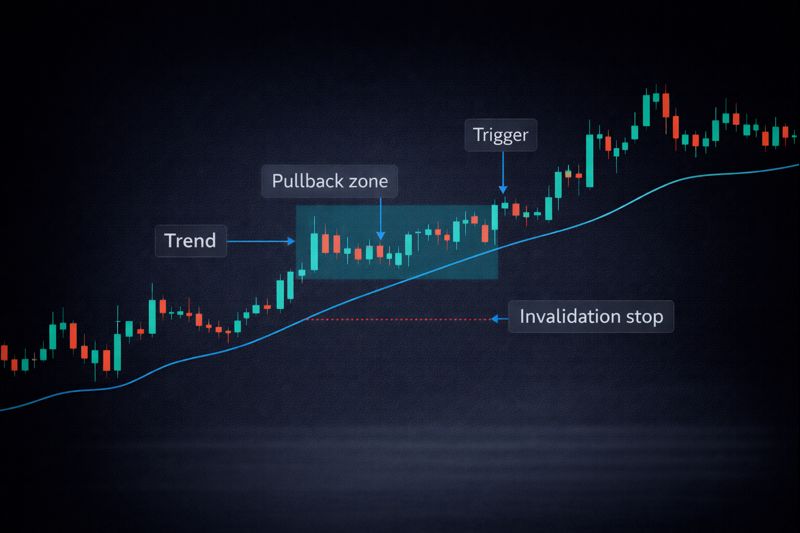
Use this structure:
Condition → Setup → Trigger → Invalidation
- Condition: what the market must look like before you even consider trading.
- Setup: what needs to form (pullback, break-and-retest, range rejection).
- Trigger: the specific event that makes you take action.
- Invalidation: what proves you’re wrong.
Here’s a simple example of a workable setup:
You only trade in the direction of a clear trend on a higher timeframe. You wait for price to pull back into a defined level/zone. You enter when price confirms with a reclaim/close back in the trend direction. You place your stop beyond the level that invalidates the idea.
Nothing fancy. Just clear.
Step 5: Turn entries into a checklist
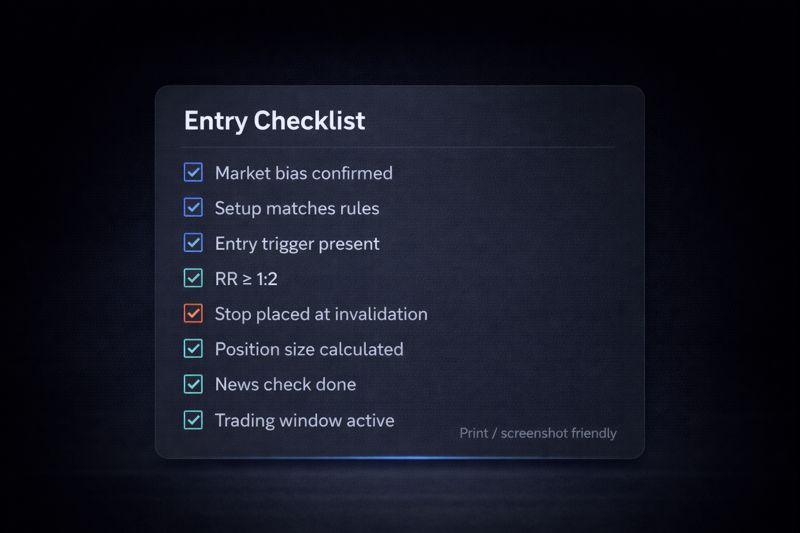
In real time, your brain can justify anything.
A checklist makes the decision binary.
Instead of “this looks good,” you want “this meets the rules.”
A good entry checklist answers:
- what must be true,
- what triggers the entry,
- and what causes you to skip the trade.
This is also where you protect yourself from chasing. Chasing usually happens when you don’t have a written “late entry” rule.
A simple rule like “If price has moved more than X beyond my entry zone, I skip” saves more money than most indicators ever will.
Step 6: Define exits (stop loss, take profit, and management)
Your exits are where discipline becomes visible.
Most traders spend 90% of their energy on entries. But your profitability is heavily influenced by:
- where you place the stop,
- whether you let winners breathe,
- and whether you cut losers before they become disasters.
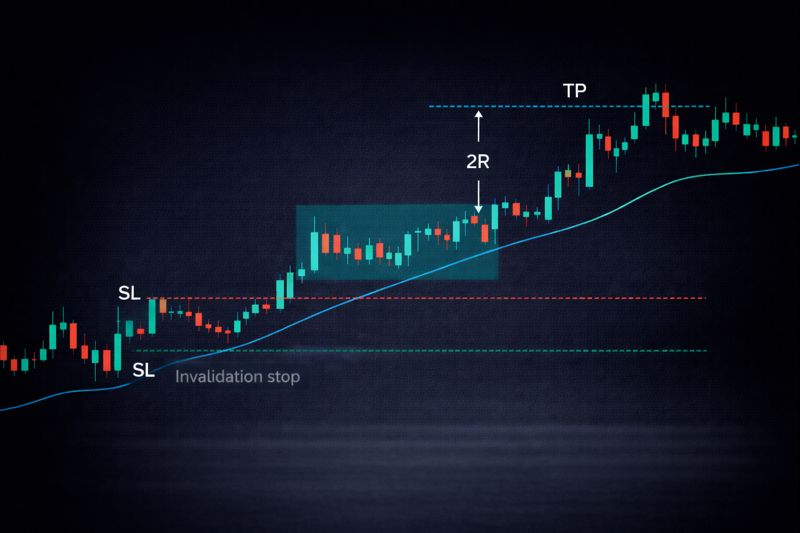
Start with stop loss placement.
A good stop loss is not “20 pips because that feels safe.” It’s placed where your trade idea is invalidated. That makes the stop logical, not emotional.
Then define take profit.
You have three basic options:
- target a key level,
- target a fixed R multiple (like 2R),
- or use a hybrid (partial at 1R, final at level or trail).
Pick one for now. Consistency beats creativity.
Finally, define management rules.
This is where most plans quietly fail. If you don’t define trade management, you’ll manage trades based on fear and hope. That usually means taking profits early and letting losses run.
Step 7: Risk management rules
This is the core of your plan. Your plan can survive a mediocre strategy. It cannot survive sloppy risk.
Risk rules prevent one bad day from turning into one bad month. They also prevent you from sizing up when you feel confident (which often happens right before a loss).
At minimum, define:
- risk per trade,
- max daily loss,
- max trades per day,
- and a rule for correlated exposure.
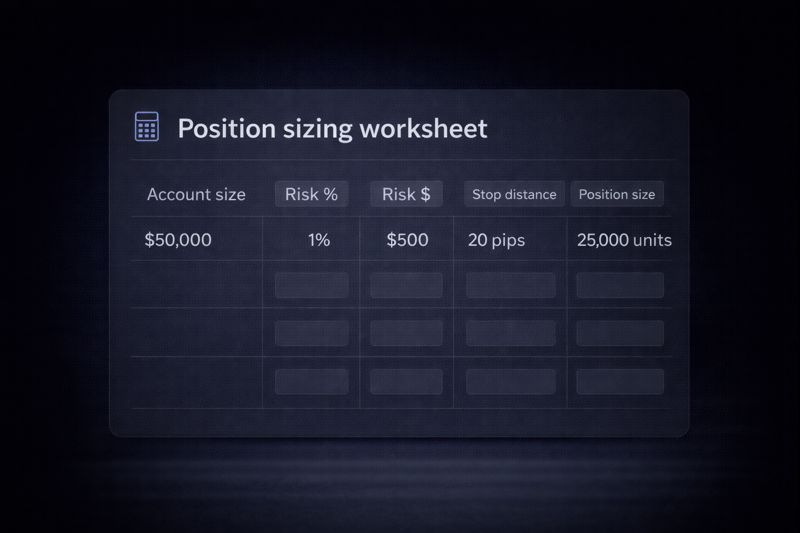
Then define how you size positions.
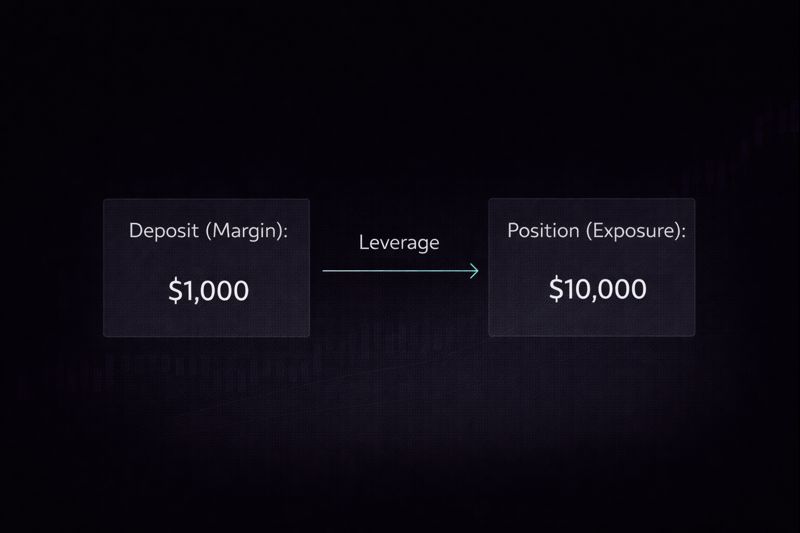
The principle is simple: you decide your risk first, place your stop where the setup is invalidated, then size the trade so the stop equals your risk amount.
That’s it.
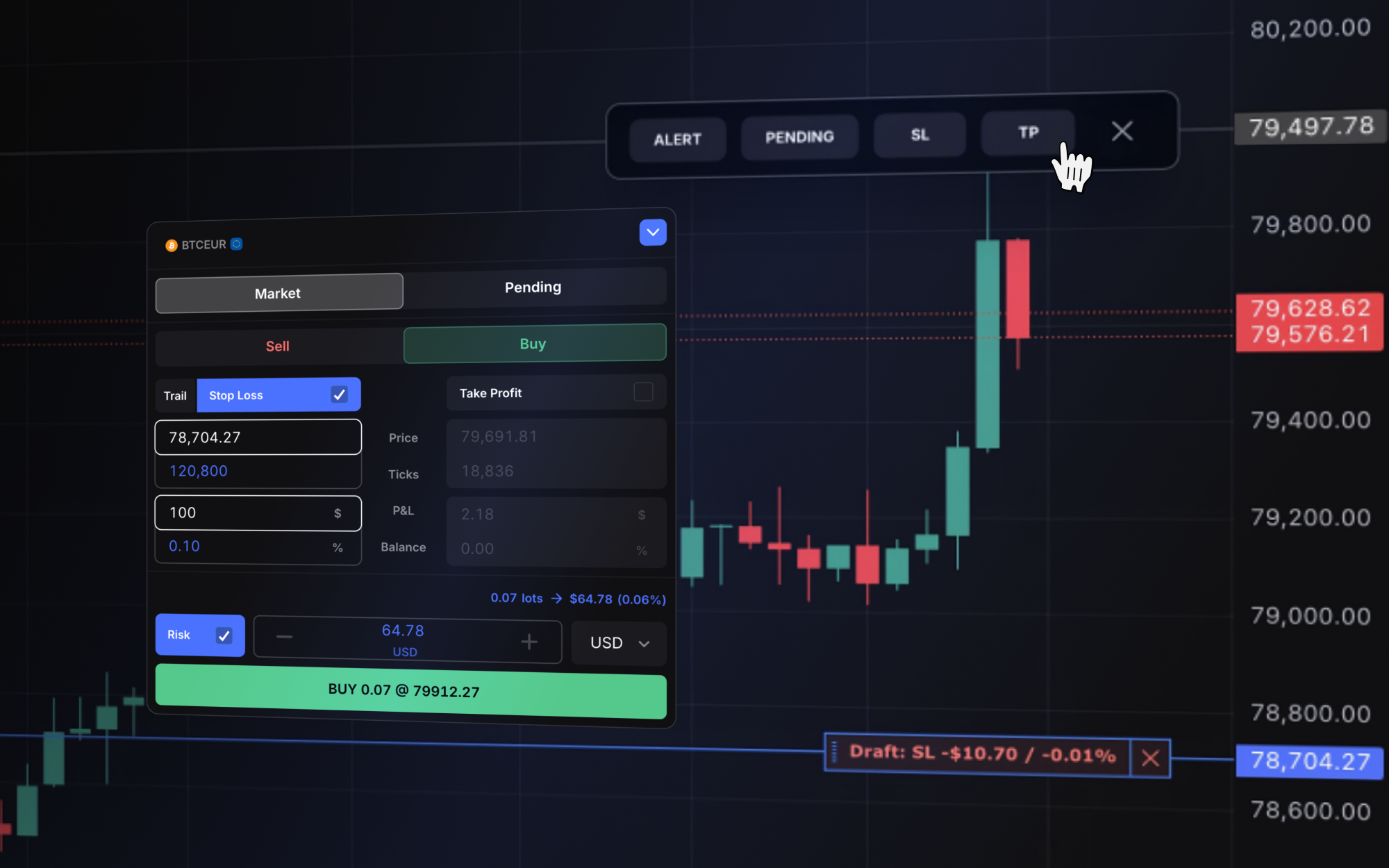
This is one reason TradeLocker’s order panel (with SL/TP + risk calculation) is useful: it’s built to calculate stop loss and take profit in $/%/ticks/price and adjust order size based on the amount you’re willing to risk, which helps traders follow risk rules without manual math.
Step 8: Define trade management
Trade management is where your plan meets reality.
Price moves. Candles spike. Your P&L fluctuates. This is where most people improvise.
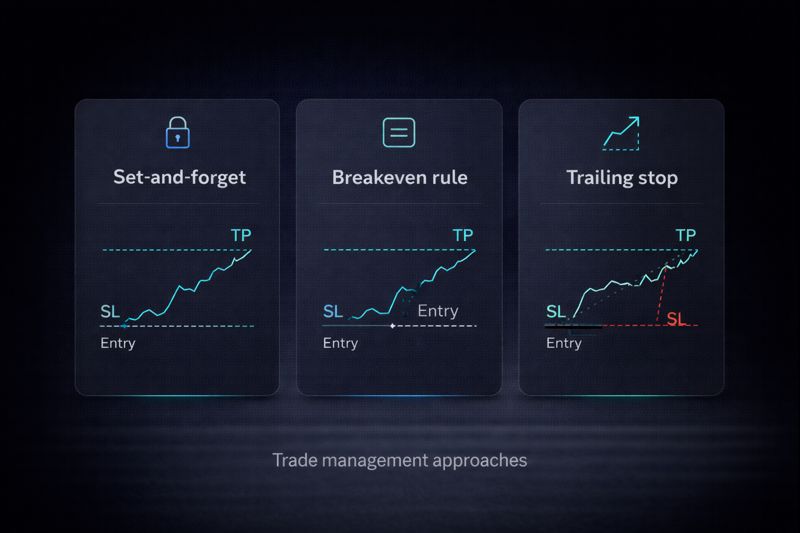
So decide your style of management in advance.
If you’re newer or prone to emotional decisions, “set-and-forget” is underrated. It removes the temptation to fiddle.
If you use breakeven rules, define the condition clearly. “Move to breakeven when I feel safe” is not a rule. “Move to breakeven after price reaches +1R and breaks structure” is a rule.
If you use trailing stops, define when you start trailing and what you trail. TradeLocker supports trailing stop loss functionality, but it only helps if you define when and how you’ll use it.
Step 9: Build your journal
Your journal is how you get better without guessing.
Most people journal outcomes. Professionals journal decisions.
If you only track profit/loss, you’ll learn the wrong lessons. You’ll reinforce lucky wins and dismiss good losses.
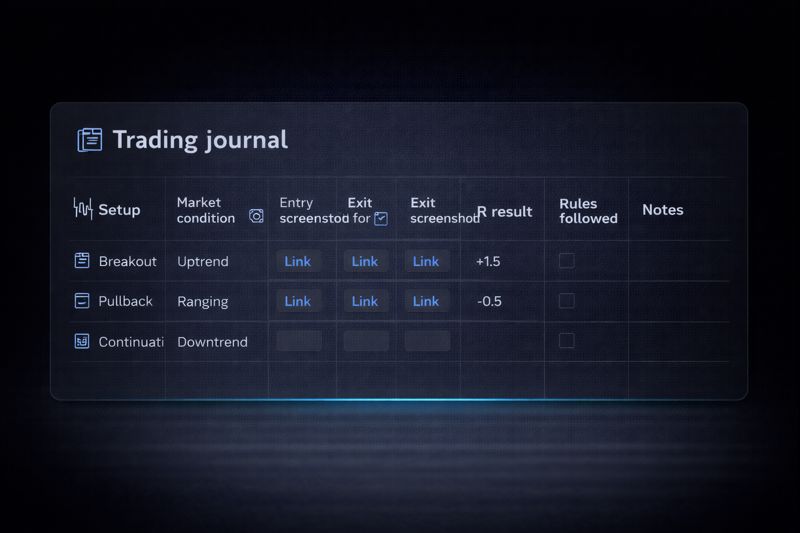
Instead, track:
- the setup name,
- screenshots of entry and exit,
- result in R (not just dollars),
- and whether you followed the rules.
That one field—Rules followed: yes/no—is the fastest way to improve.
R is useful because it standardizes performance. A +2R day means the same thing whether you risked $10 or $1,000.
Step 10: Create a weekly review routine
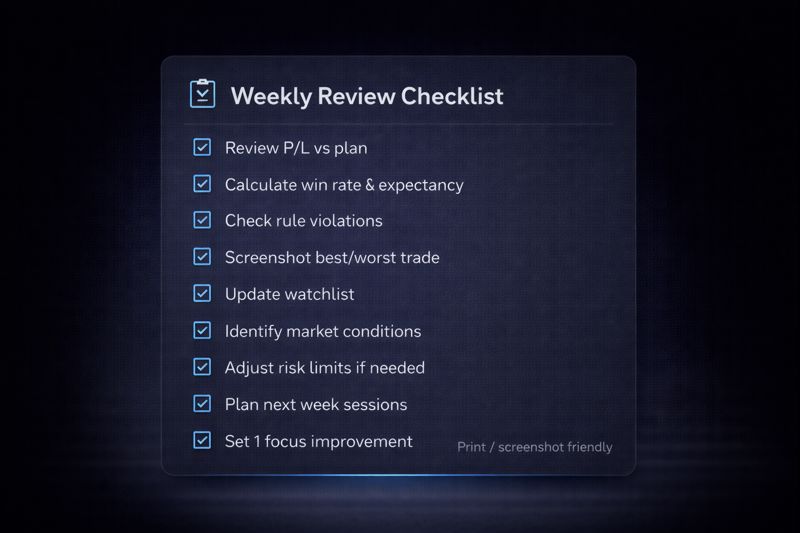
A plan shouldn’t change every day. But it should evolve. The answer is a scheduled weekly review.
Once per week, you step back and ask:
- Which setups performed best, and in what conditions?
- Which mistakes repeated?
- Which rule was hardest to follow?
- What’s one change you’ll test next week?
That last part matters. One change per week. Not five.
If you change multiple variables, you never learn what caused improvement—or what caused damage.
Free trading plan template
Below is a complete template. It’s intentionally short. You should be able to fit this on one page.
TRADING PLAN (v1)

1) Goal + constraints
Process goal:
Timeframe:
Risk per trade:
Max daily loss:
Max weekly loss:
Max drawdown:
Max trades/day:

2) Markets + schedule
Market:
Instruments:
Trading window (days/times):
No-trade conditions (news / low liquidity / fatigue rule):

3) Setup (my edge)
Setup name:
Market conditions required:
Trigger:
Invalidation:

4) Entry rules
Entry checklist (3–5 items):
Late entry rule:
Skip rules:

5) Exit rules
Stop loss placement rule:
Take profit rule:
Minimum R:R:
Trade management rules (set-and-forget / BE / trailing):

6) Risk rules (non-negotiable)
Position sizing method:
Correlation rule:
Max open positions:
If max daily loss hit: stop trading and review

7) Journal + review
What I record after each trade:
Weekly review time:
One change per week maximum
Minimum Viable Trading Plan
If the full plan feels like a lot, start smaller.
A Minimum Viable Trading Plan is simply:
- one market,
- one setup,
- one entry trigger,
- one stop rule,
- one take-profit rule,
- one risk rule,
- and one weekly review.
Do that for 30 sessions. Then expand.
Two filled trading plan examples (so you can model yours)
These are not meant to be perfect. They’re meant to be followable.
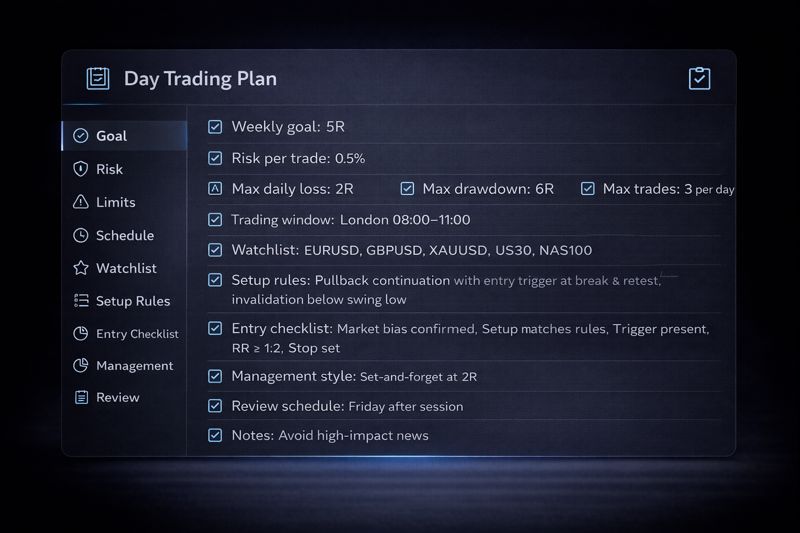
Example 1: Day trading plan (strict limits, simple execution)
This plan is built around protecting your day.
You trade a defined window. You take a small number of trades. You stop after a daily loss limit. That’s how you avoid death-by-a-thousand-cuts.
A practical version looks like this:
You trade a major FX pair or two during one session. You only take your one setup. You risk a fixed amount per trade. You stop trading after -2R (or whatever your rule is). You journal every trade in under 2 minutes.
The power here isn’t the setup. It’s the structure.
Example 2: Swing trading plan (fewer trades, more patience)
This plan is built around reducing decision fatigue.
You review once per day. You hold trades longer. Your stops are wider, and your size is smaller relative to the stop distance.
A practical version looks like this:
You trade a break-and-retest style setup on the 4H or daily chart. You keep your watchlist small. You limit open positions to avoid correlation. You don’t stare at charts all day. You make decisions at a consistent time, then step away.
This works well for people with a normal schedule, because it doesn’t demand constant attention.
The mistakes that quietly break most trading plans
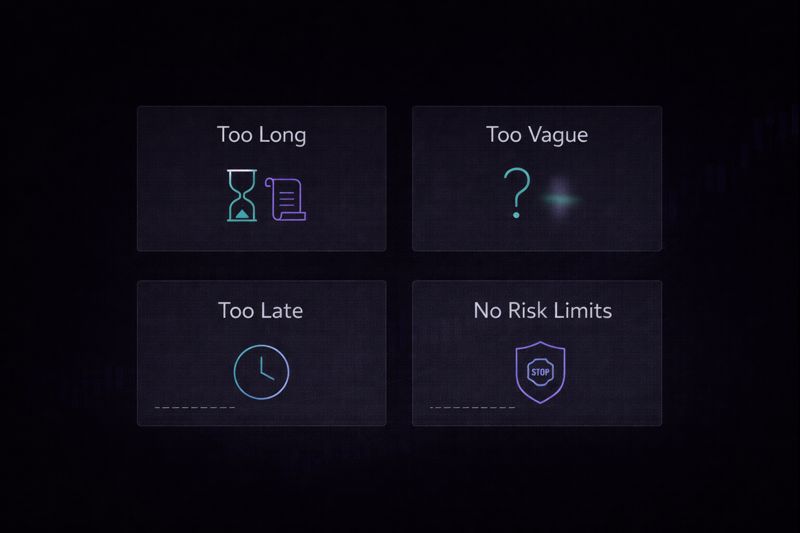
Most plans don’t fail because they’re missing a clever indicator. They fail because the rules are too flexible.
Here are the patterns to watch for:
Mistake 1: The plan is too complex.
When your plan has five setups, three timeframes, and eight management rules, you’ll spend more time interpreting the plan than trading it. Complexity creates loopholes.
Mistake 2: You never define “no trade” conditions.
If you don’t define when you will not trade, you will trade when you’re bored, tired, frustrated, or chasing. That’s not a market edge—that’s an emotional habit.
Mistake 3: Your plan changes after every loss.
Losses are part of the game. If you edit your rules every time you lose, you never give the plan a chance to work. You also never learn what’s actually broken: the strategy or the execution.
Mistake 4: Position sizing changes based on confidence.
Confidence is not a risk metric. If you size up when you “feel” it’s a good trade, you’re training your account to take the biggest hit at the worst time.
How to execute your trading plan consistently
Execution is a workflow problem, not a motivation problem.
If your process is smooth, you follow the plan more easily. If your process is messy, you improvise.
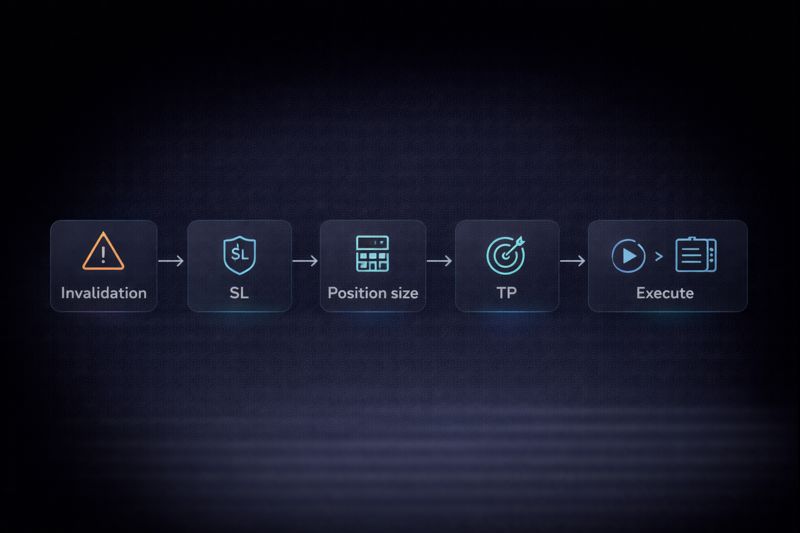
Here’s the cleanest routine I’ve seen work for most traders:
1) Pre-trade (1 minute)
You identify the setup. You define invalidation. You check if you’re within your daily limits.
2) Place the trade “risk-first”
You place the stop where you’re wrong. You size the position to match your risk rule. You place take profit. Then you execute.
This is where modern platforms can help. TradeLocker’s order panel is specifically designed to calculate SL/TP in different units and adjust position size based on the risk amount you set—so “risk-first” becomes easier to execute in real time.
3) Post-trade (2 minutes)
You screenshot. You journal. You mark “rules followed: yes/no.” Then you move on.
Where TradeLocker fits
A trading plan is the system. Your platform is the environment that either supports that system or makes it harder to follow.
TradeLocker is built around modern charting and risk tools, which maps well to the “plan-first” way of trading. TradeLocker includes TradingView charting, on-chart trading, and an order panel with SL/TP and a risk calculator that can auto-calculate levels and adjust order size based on your chosen risk. It also supports trailing stop loss and one-click trading (useful only if your plan is strict and you’re not prone to impulsive entries).
Final checklist
You don’t need a perfect plan. You need a complete one.
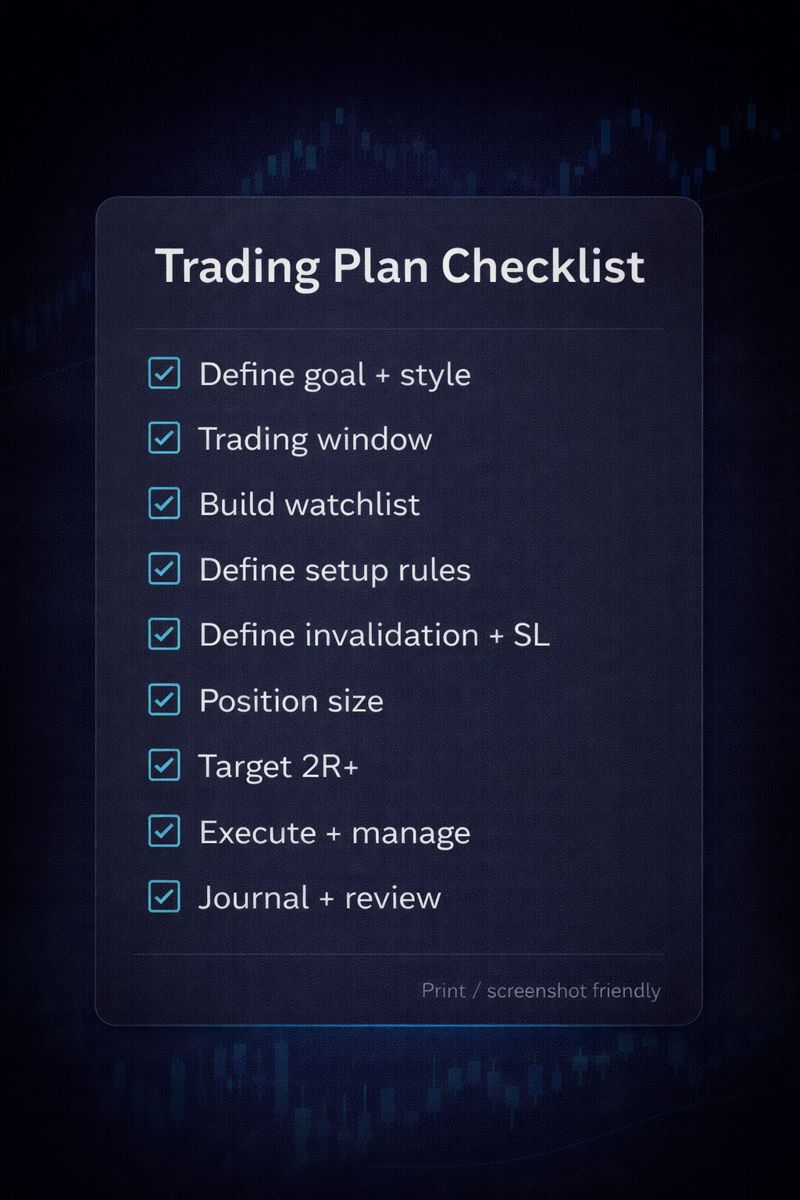
Here’s a short final checklist you can keep at the end of the post:
- My plan defines constraints: risk per trade + max daily loss + max drawdown.
- My plan has a small scope: one market type + small watchlist.
- My setup is clear: condition → trigger → invalidation.
- My entries are binary: checklist, not vibes.
- My exits are written: stop, target, management rules.
- My position sizing is consistent: stop distance + risk amount → size.
- I journal decisions: especially “rules followed yes/no.”
- I review weekly: and change one thing at a time.
Conclusion
A trading plan isn’t a document you write to feel organised. It’s the thing you follow when you feel rushed, uncertain, or frustrated.
Build it simple. Run it for 30 sessions. Review weekly. Improve one variable at a time.
That’s how trading stops feeling like chaos and starts feeling like a process.
Disclaimer: This article is educational and not financial advice.
