What is paper trading?
Paper trading is practicing the markets with simulated money. You place real orders, watch real price movements, and manage real positions. The only thing that is not real is the capital at risk.
The name comes from a pre-digital habit: traders who wanted to track hypothetical trades would write them down on paper, noting entry price, size, and exit, then follow how the position would have played out. Today the paper is gone, but the principle is the same. You trade as if it counts. You just do not bleed if it goes wrong.
That distinction matters more than it sounds.
What does paper trading mean?
Paper trading means executing trades in a simulated environment that mirrors live market conditions. Prices are real. Order types are real. The platform behaves the same way it would with a funded account. The difference is that losses do not leave your account and gains do not reach your bank.
It is not a video game. It is not a simplified demo with fake price feeds. When you paper trade on TradeLocker, you are interacting with the same charting tools, the same order panel, and the same risk controls you would use if real money were on the line.
TradeLocker runs its own demo account, so you can open one directly and start practicing on a simulated balance. You do not need to sign up through a broker or join a prop firm first.
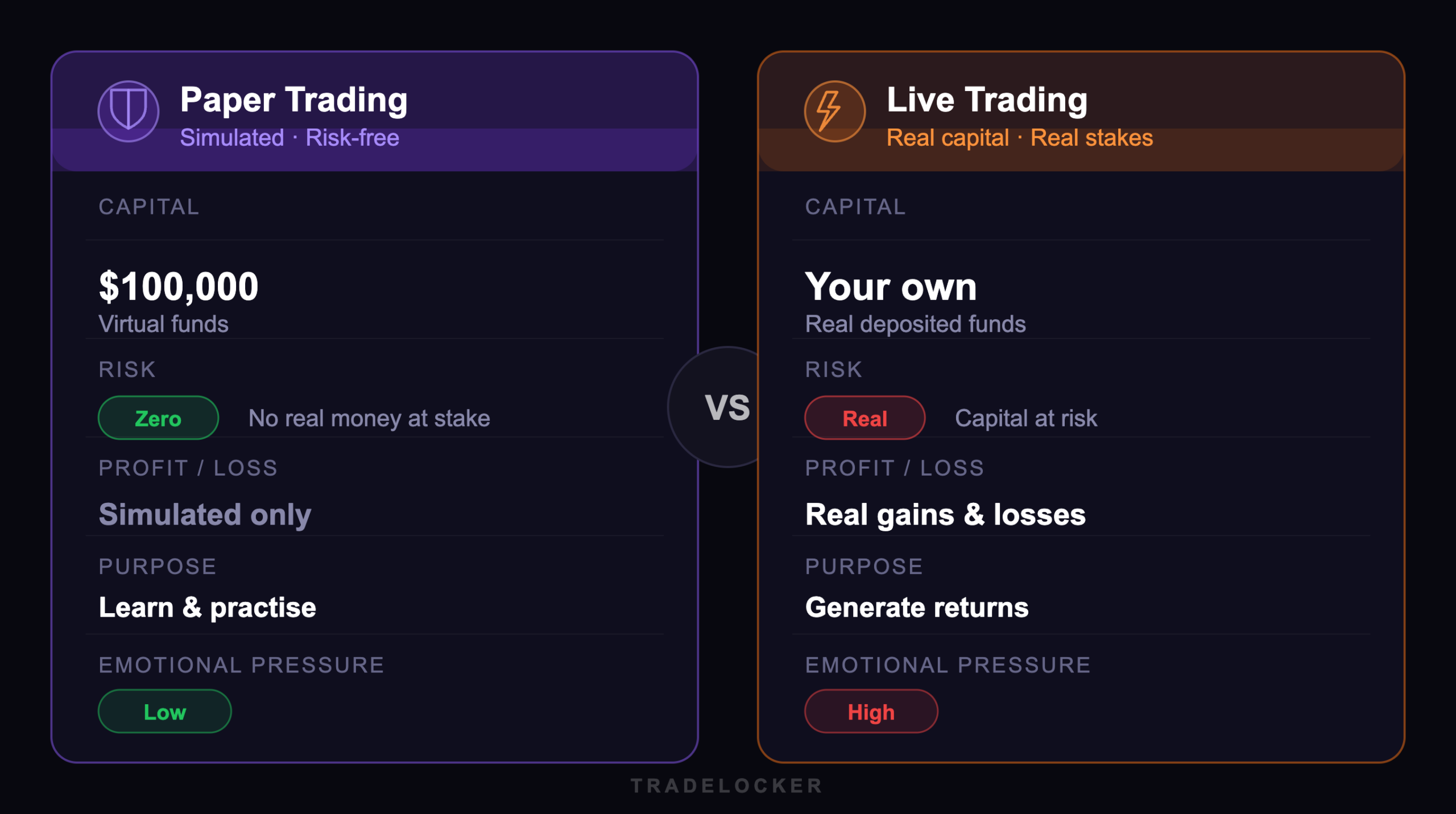
The core distinction: paper trading vs live trading
In live trading, every decision carries a financial consequence. A bad entry costs money. A missed exit costs more. The emotional weight of that reality changes how most people behave.
In paper trading, the mechanics are identical but the consequence is removed. That makes it the right environment to learn order types, test a strategy across different market conditions, and build the habit of following a plan before you need that habit to protect real capital.
The absence of financial risk is the point. It gives you the space to make mistakes at zero cost, study what went wrong, and adjust before the market charges you for the same lesson.
Paper trading vs demo account: is there a difference?
This comes up often, and the short answer is: not really.
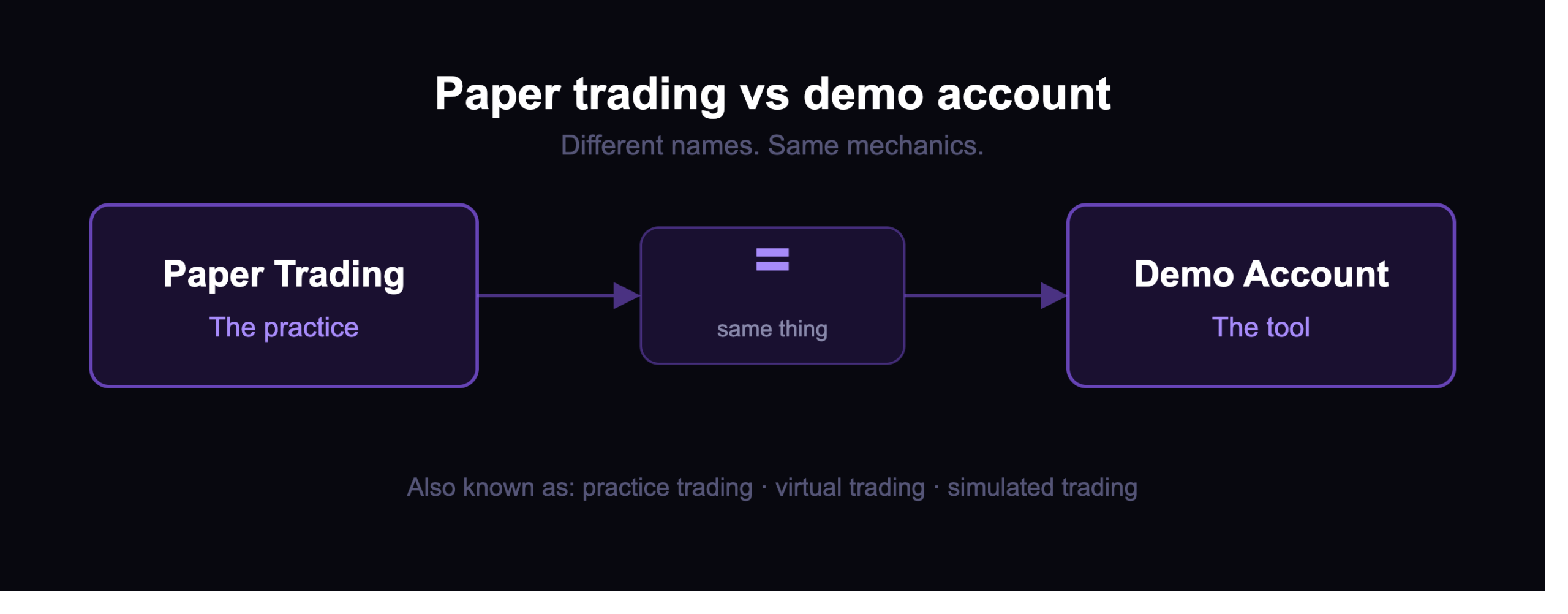
“Paper trading” and “demo account” describe the same thing from two different angles.
Paper trading is the practice. A demo account is the tool you use to do it.
When traders say they are paper trading, they usually mean they are using a demo account. When a platform offers a demo account, it is offering the infrastructure for paper trading.
On TradeLocker, there is no meaningful distinction between the two. You open a demo straight on the platform with a Google or Apple sign-in, so you can start in a couple of minutes. The demo account is the paper trading environment. You get full access to the platform, real market data, and the same tools available to live traders. The only difference from a funded account is that the balance is simulated.
Some platforms create a noticeable gap between their demo and live environments, with simplified interfaces or delayed data on the demo side.
TradeLocker does not work that way. The demo account runs on the same platform as live trading, so the skills you build in the demo transfer directly. There is no adjustment period when you go live.
If you have seen “practice trading platform,” “virtual trading account,” or “simulated trading” used elsewhere, those all refer to the same concept.
Different names, same mechanics.
Why practice trading before going live?
The markets do not offer a grace period for learning on the job. A trader who goes live before they are ready does not just risk losing money. They risk building bad habits under pressure that take far longer to undo than the losses themselves.
Paper trading solves three specific problems. On a TradeLocker demo, you work through all three on a simulated balance, across web, desktop, and mobile.
Learning order types without the cost of confusion
Most new traders understand buy and sell at a surface level. The complexity shows up in execution: market orders vs limit orders, stop losses, take profit levels, trailing stops, partial closes. Getting these wrong on a live account is expensive. Getting them wrong on a demo account is instructive.
On TradeLocker, you can work through every order type in the demo, place orders incorrectly, see what happens, and understand why before that misunderstanding costs you anything.
Testing a strategy across real conditions
A strategy that looks solid on a backtest or a screenshot does not always hold up in a live session. Spreads widen, price action differs from the theoretical clean setup, and entries that seemed obvious in hindsight are harder to identify in real time.
Paper trading gives you a way to test a strategy across multiple sessions and different market conditions without the distortion of financial risk affecting your judgment. If the strategy does not perform, you learn that before it hurts. If it does, you build the confidence to execute it consistently when it matters.
Building the habit of following a plan
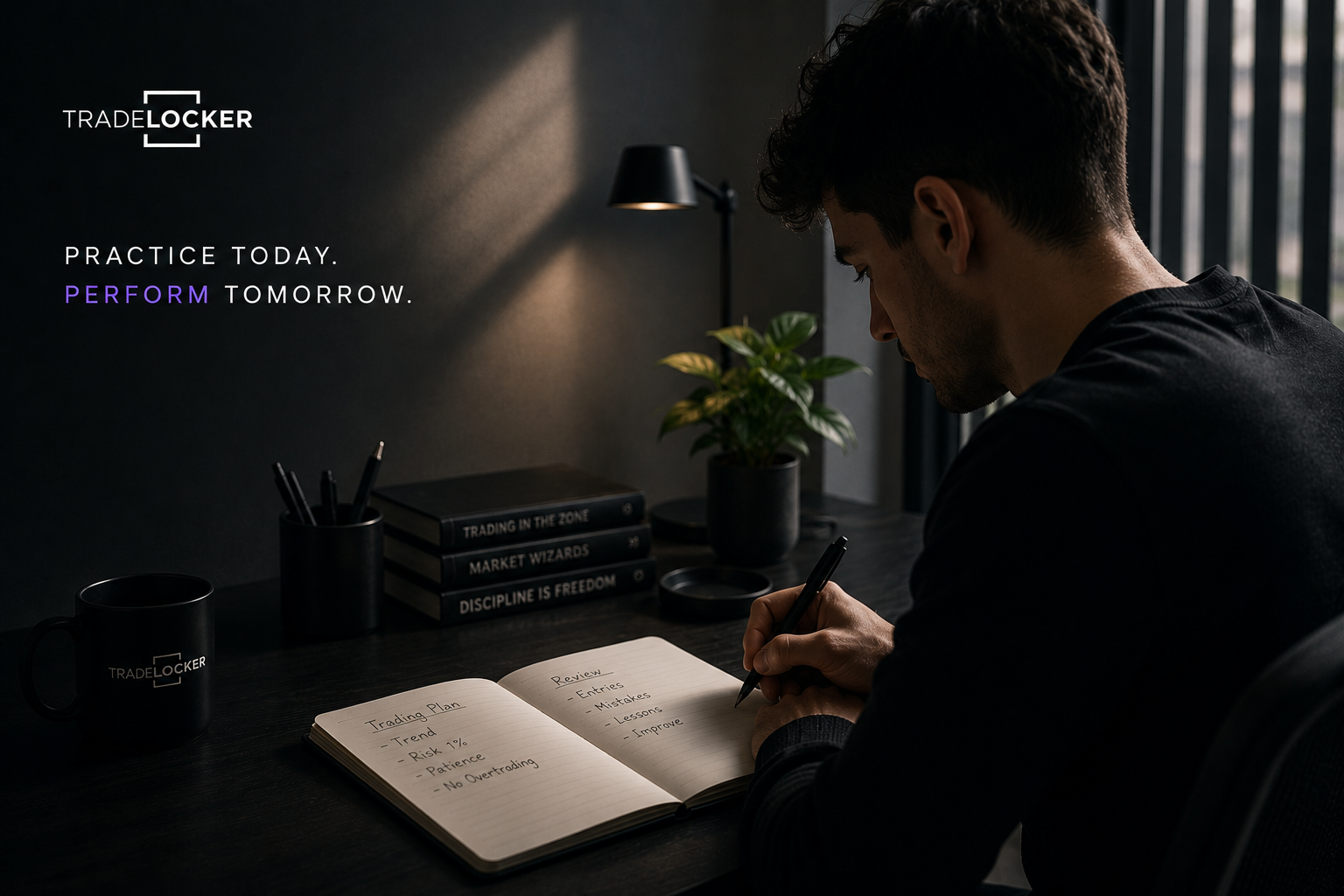
This is the one most traders underestimate. Knowing what to do and doing it under pressure are two different skills. Paper trading lets you practice the second one: entering only when your criteria are met, taking the stop when price hits it, not adding to a losing position because you “feel” it will turn.
None of that is natural. It is trained. And the time to train it is before real money is involved.
How to start paper trading on TradeLocker?
Getting started takes less than two minutes.
Step 1. Go to app.tradelocker.com
Step 2. Sign up with Google or Apple.
Step 3. Start trading on Demo with the same discipline you would apply to a live account.
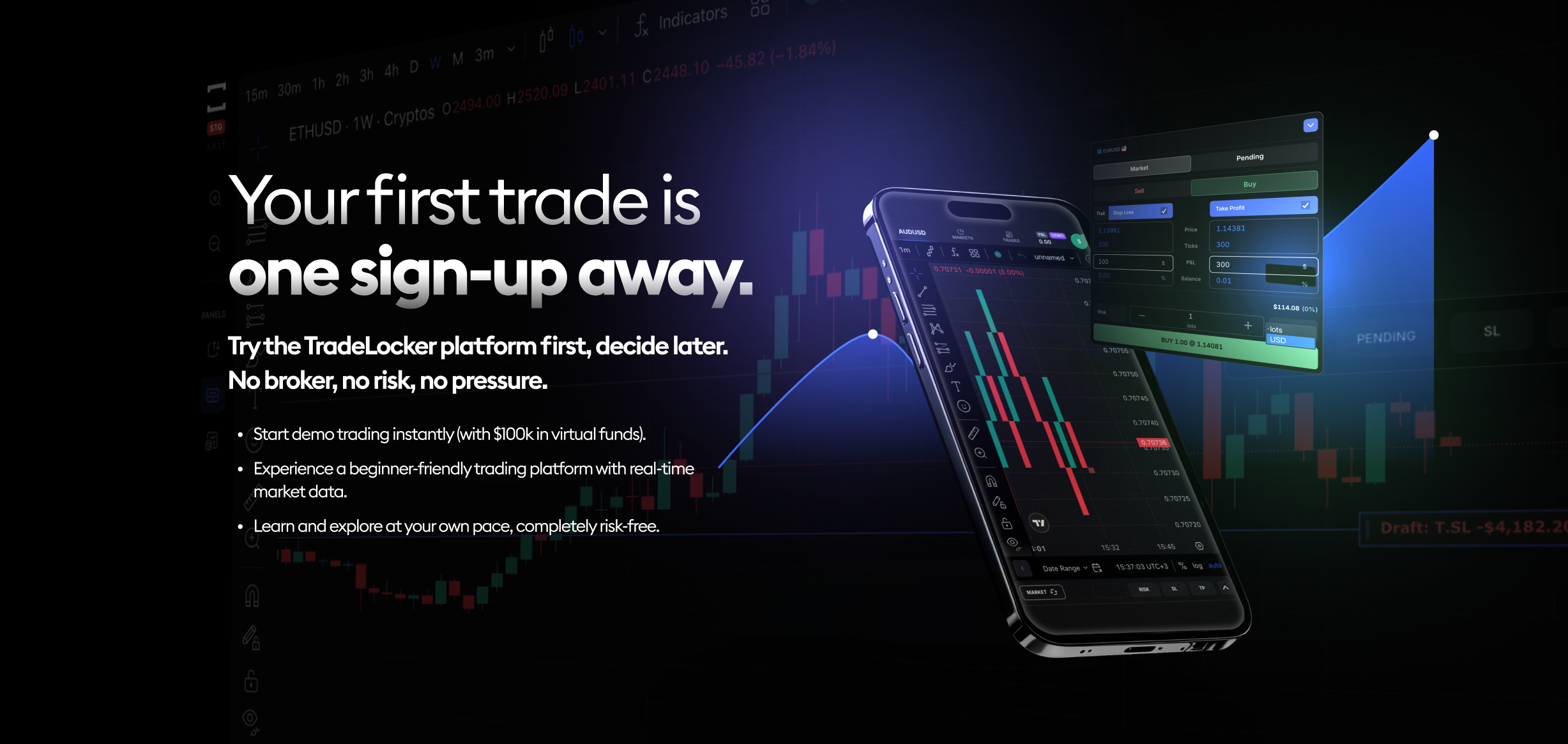
You will be given a simulated balance to trade with.
Set stop losses on every position. Follow your plan. Log your trades. Treat the demo as a rehearsal, not a playground.
The platform works across web, desktop, and mobile, so you can practice on whatever device you plan to use when you trade live.
When you are ready to move to a funded account or a prop firm challenge, your workflow transfers directly.
No re-learning the platform.
No adjustment period.
Just execution.
Start your free demo account on TradeLocker
Frequently asked questions
Does paper trading use real money?
No. Paper trading uses a simulated balance. No real capital is deposited or at risk. Gains and losses exist only within the demo environment and have no effect on your actual finances.
Is paper trading the same as a demo account?
Yes. The two terms describe the same practice from different angles. Paper trading is the activity; a demo account is the tool used to do it. On TradeLocker, the demo account is the paper trading environment, built on the same platform as live trading.
How long should I paper trade before going live?
There is no fixed answer, but a useful benchmark is consistency, not time. Paper trade until you can execute your strategy with discipline across at least 20 to 30 trades without breaking your own rules. Time spent in the demo matters less than what you prove to yourself during that time.
Can I practice prop firm challenges with a demo account?
Yes. TradeLocker is used by a number of prop firms as their trading platform. Practicing in the demo lets you familiarize yourself with the platform mechanics, order types, and risk tools before you begin a funded challenge where rule violations have real consequences.
Does paper trading prepare you for the emotional side of live trading?
Partially. Paper trading builds process discipline and platform fluency. What it cannot fully replicate is the psychological weight of real financial risk. Most traders find they need to manage their emotions differently once money is on the line. That is expected. The goal of paper trading is not to eliminate that adjustment. It is to make sure the mechanics are solid before the emotions enter the equation.
