You don’t need $500, a funded account, or a prop firm approval to start trading.
You need a trading platform and about two minutes. Everything else, the strategy, the discipline, the track record you build from there.
This guide will tell you exactly how.
Can you really trade without money?
The short answer is yes.
The slightly longer answer is: not only can you trade without money, you probably should before you put any real capital on the line.
When you open a demo account, you get a simulated balance: $10,000, $50,000, whatever the platform sets and you trade with it on live markets. Real price data. Real order types. Real spreads. The platform behaves identically to a funded account. The only thing missing is the consequence.
That last part is the point.
Most people assume a demo account is a tutorial mode, simplified, slowed down, disconnected from reality. It isn’t.
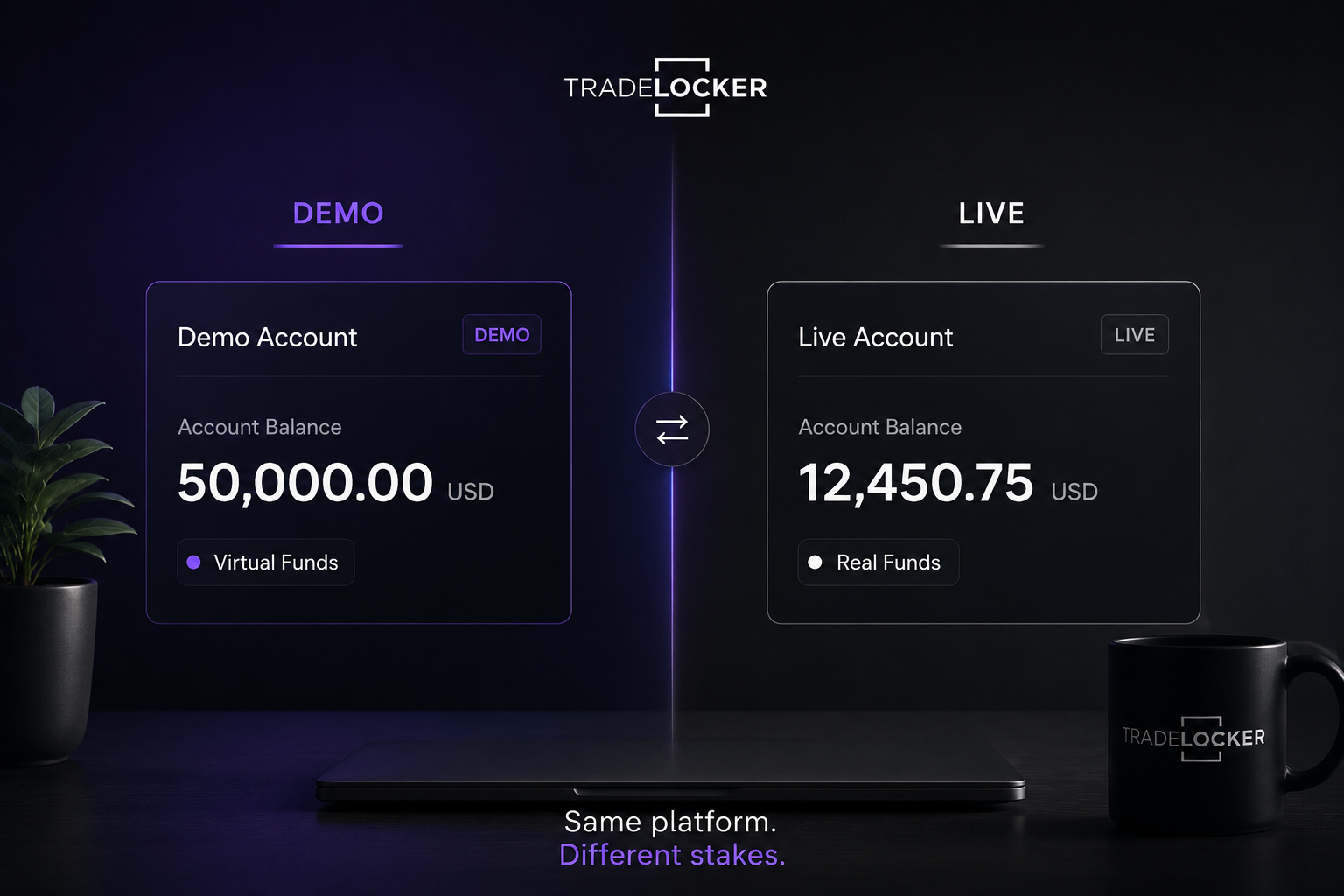
TradeLocker Demo runs on the exact same platform as live trading. Same charts. Same order panel. Same tools. You’re not practicing on a simulation of the platform. You’re practicing on the platform.
What virtual funds actually simulate is market exposure. You’re learning how price moves, how orders fill, how your own judgment holds up when you have to make a call in real time. That’s the foundation.
And it costs nothing to build it.
Step-by-step: open a free demo account on TradeLocker
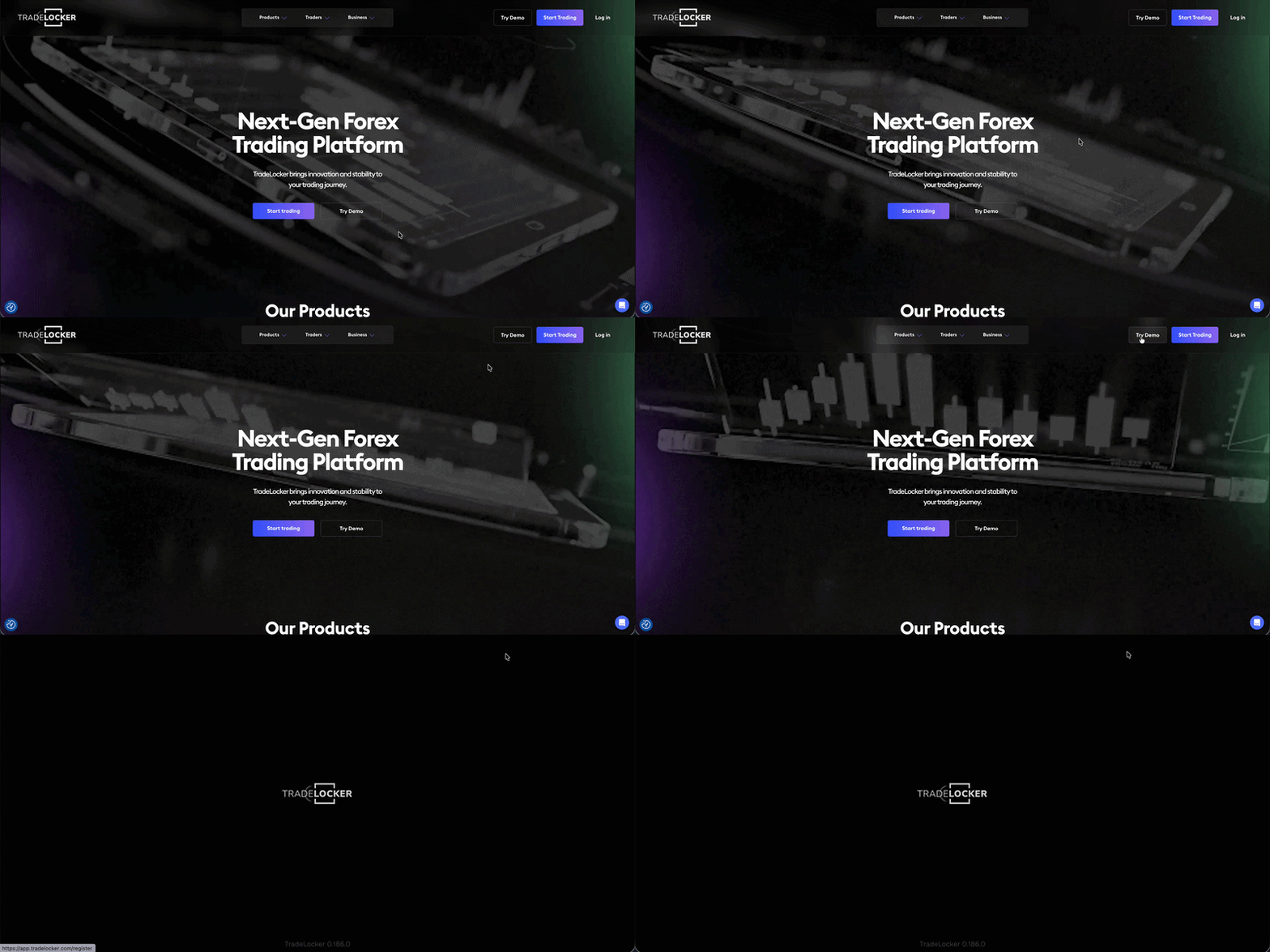
Step 1: Try Demo
Head over to app.tradelocker.com
Step 2: Create your TradeLocker Profile
You’ll be taken to the sign-up screen. Choose how you want to sign up.
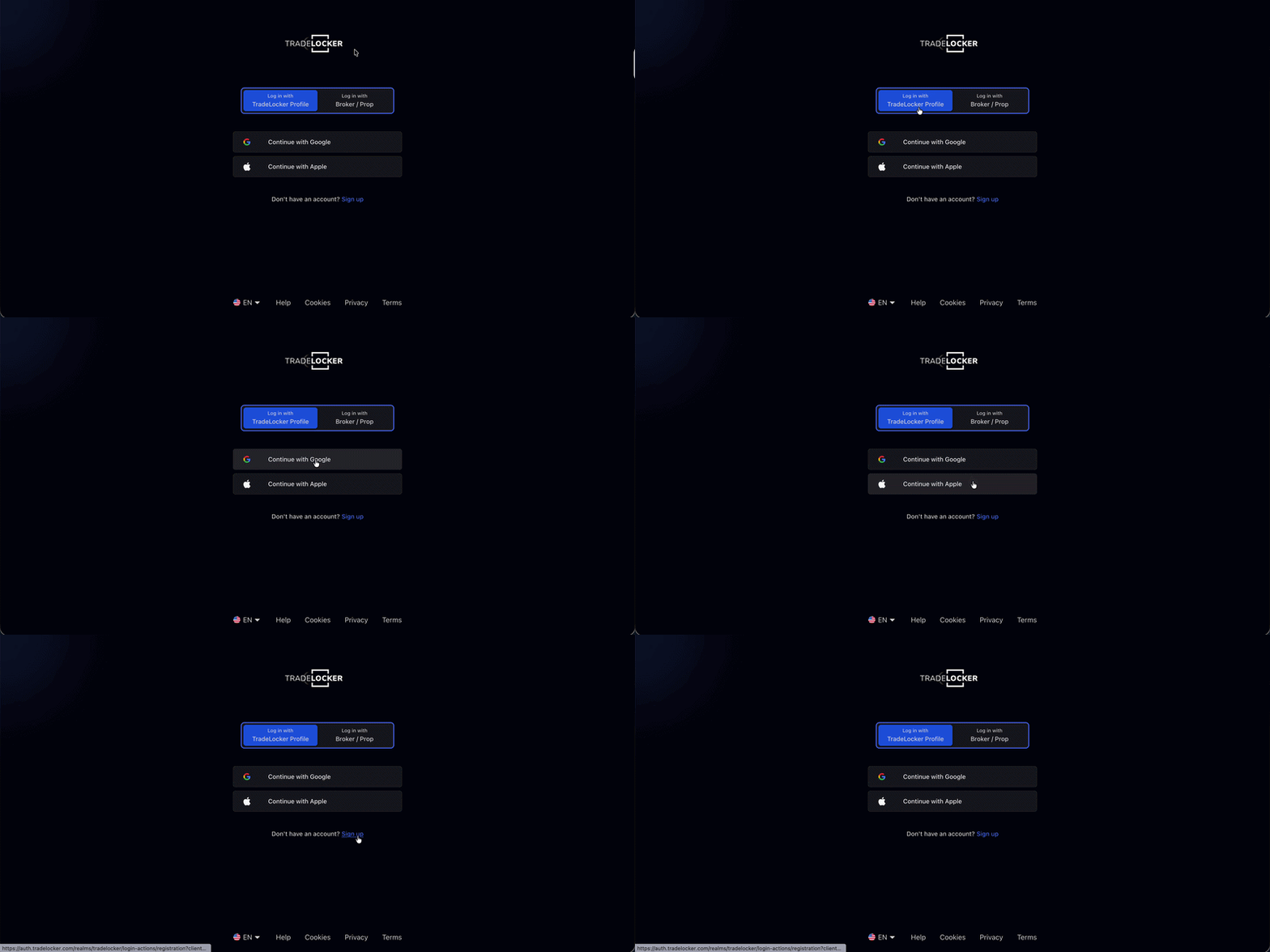
Your TradeLocker Profile is your single identity on the platform. It’s where you manage everything, your demo account, and any broker or prop firm accounts you connect down the line.
Step 3: Start trading
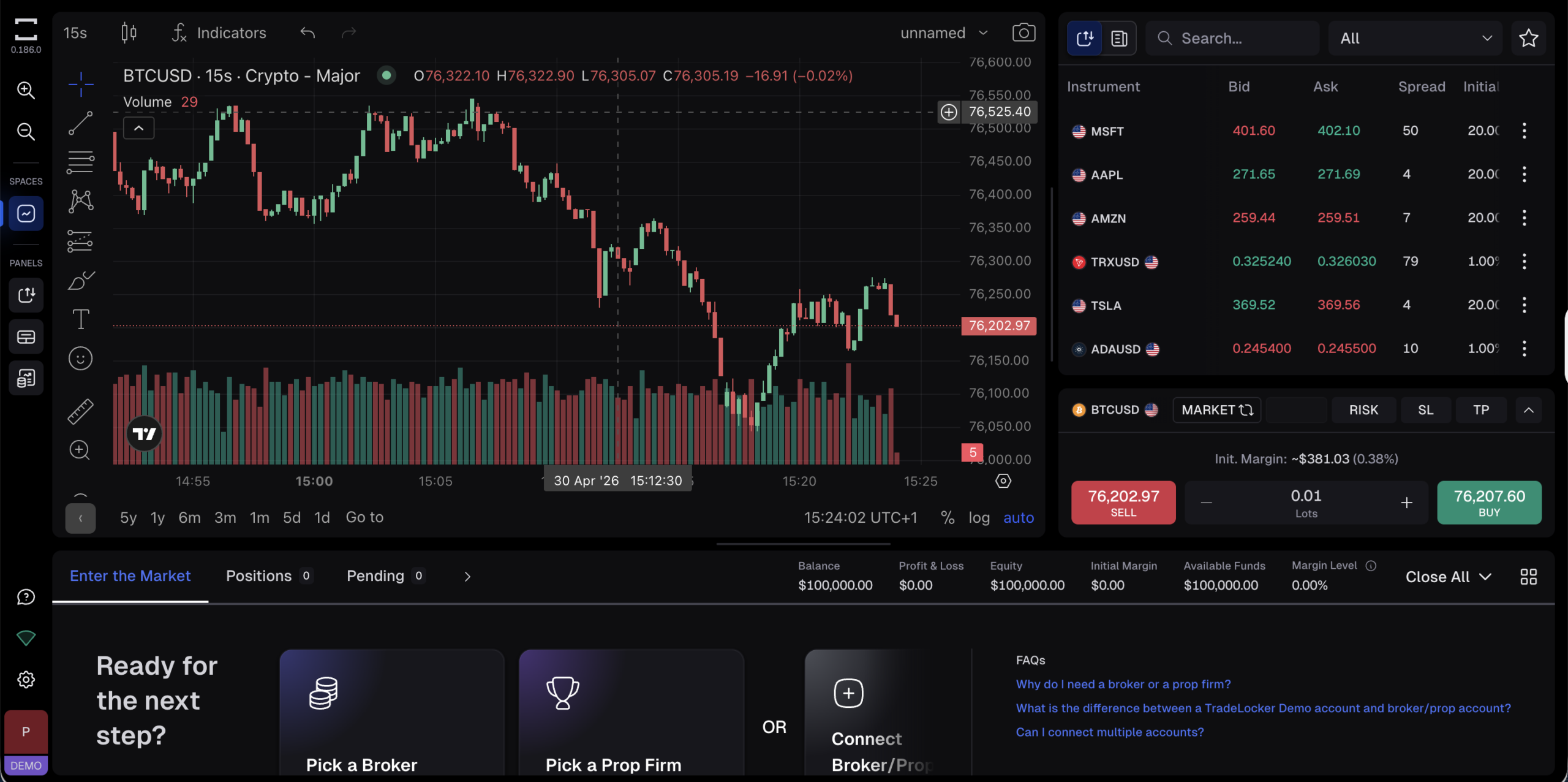
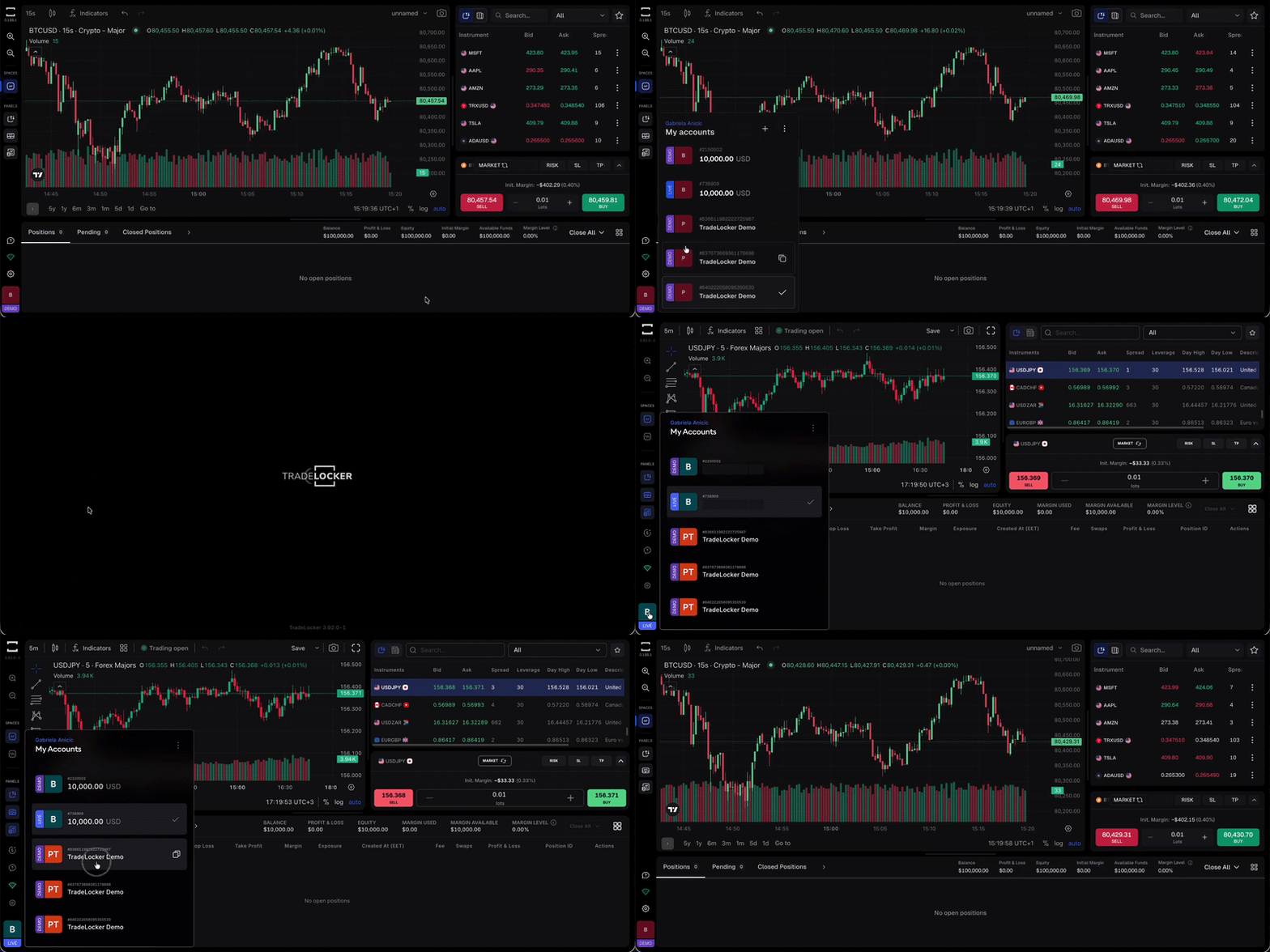
And you’re in. You’ll land on the platform with a $100,000 virtual demo account ready to go.
The DEMO badge in the bottom left corner confirms you’re trading with virtual funds.
Your demo account uses virtual funds only. No real money is involved and nothing needs to be deposited to get started.
Step 4: Place your first trade
Use the search bar to find an instrument you want to trade.
Select it, choose your position size, and hit Buy or Sell. You can also set a Stop Loss and Take Profit before confirming, a good habit to build from the start.
What to practice in your first 30 days
A demo account without a plan is just a sandbox. The traders who actually get value from it treat the first month as a structured sprint, not an open-ended “mess around until something clicks” phase.
Here’s a framework that works.
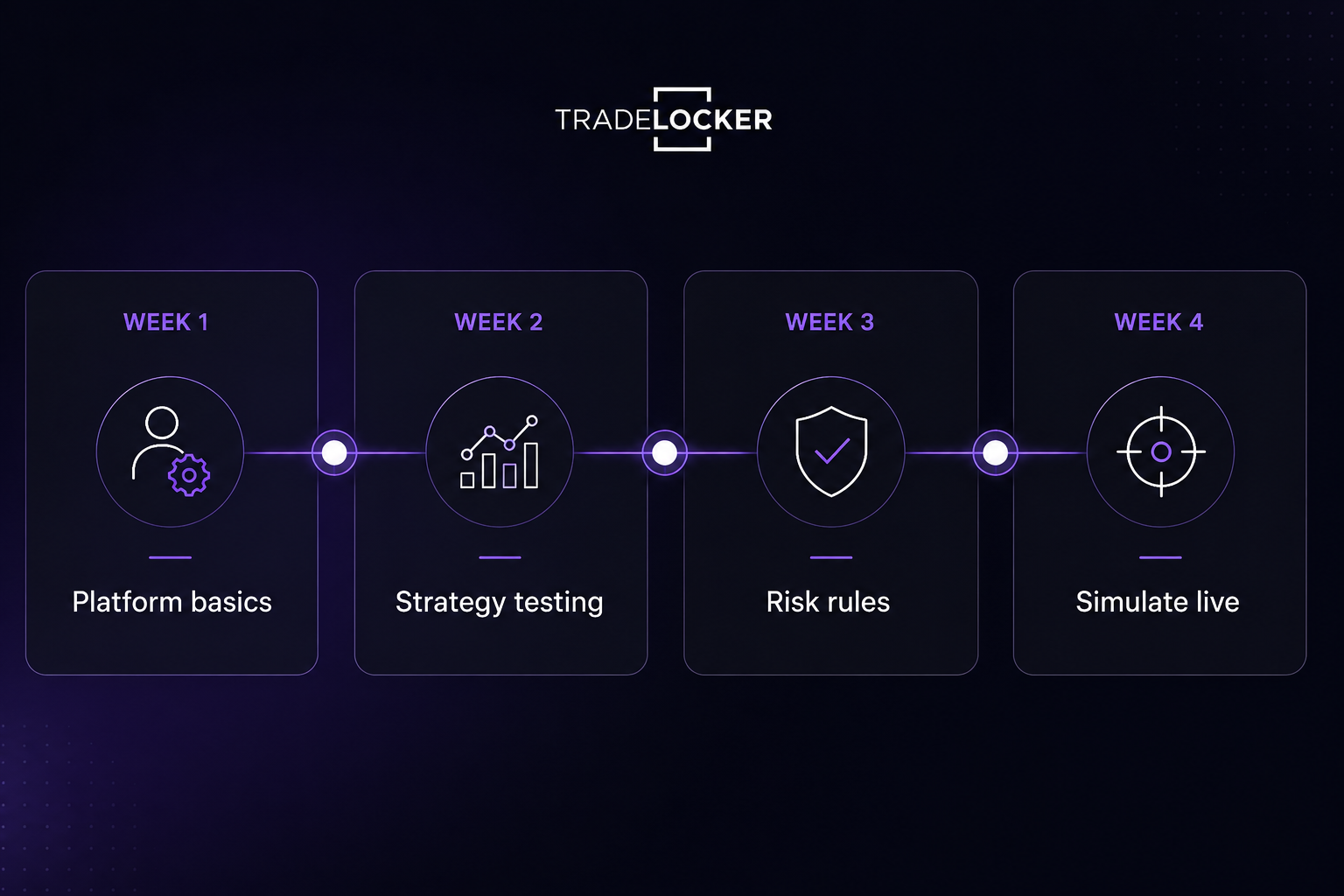
Week 1: Learn the platform, not a strategy
Most new traders skip straight to strategy. That’s backwards.
Before you think about setups, spend week one getting completely fluent with the platform mechanics. Place market orders. Place limit orders. Set stop losses and take profits. Watch how spread affects your entry. Close a trade manually. Let one hit its stop. Let one hit its target.
Do it wrong on purpose. Enter a trade with the wrong order type and see what happens. Try to move a stop after it’s been triggered. Understand the edge cases before they catch you in a real session.
Platform fluency is invisible until you don’t have it. Build it now.
Week 2: Test one strategy, nothing else
Pick one approach and commit to it for the full week. Trend following. Breakouts. Support and resistance levels. Doesn’t matter which, what matters is that you pick one and trade it consistently.
The point is not to find the best strategy. It’s to see whether any strategy holds up across real conditions. A setup that looks clean on a static chart gets harder to identify in real time when price is moving, spreads are widening, and you have to make a decision in the next 30 seconds.
Log every trade. Write down your reasoning before you enter. Compare what you expected to what actually happened. That’s where the real learning lives, not in the outcome, but in the gap between your read and reality.
Week 3: Add risk rules and actually follow them
This is the week most demo traders skip and the one that matters most.
Set your rules: maximum risk per trade (1–2% is standard), a hard daily loss limit, no trading the first 15 minutes after a major news release. Then hold yourself to them, even when the trade looks good and the rule says no.
Practice cutting a loss when price hits your stop. Not moving the stop, not waiting for “just a bit more room” — taking the loss. Practice walking away from a setup that doesn’t meet your criteria, even when every instinct says to take it.
These habits don’t come naturally. They’re trained. And the time to train them is before real money is involved.
Week 4: Close the gap between demo and live
Spend your final week simulating live conditions as closely as possible.
Trade the same instruments you’ll use with real money. Apply the same position sizing. If you plan to trade at 8am before work, trade at 8am before work.
The psychological gap between demo and live trading is real — but the more seriously you treat the demo, the smaller that gap becomes. Every trader who blows their first live account too fast skipped this step.
When to switch from demo to live trading
There’s no magic number of days. Anyone giving you a fixed timeline is guessing.
What actually signals readiness is consistency and not the “mostly consistent with a few exceptions I can justify” kind. Real consistency looks like this:
You execute without hesitation. Your entry criteria, stop placement, and target are defined before you open a trade. You’re not figuring it out as you go.
You’ve followed your rules across 20–30 consecutive trades. Not most of the time. Every time. Exceptions don’t count, even the ones that worked out.
You know how to handle a losing streak. Three or four red trades in a row is normal. If you can sit through it without revenge trading or abandoning your plan, you’re building the right foundation.
The platform is automatic. You’re not thinking about where settings are or what buttons do. Execution is muscle memory.
Your results reflect a process, not luck. Your demo equity curve doesn’t need to be aggressively profitable. But it should show that you entered for a reason, sized consistently, and managed trades the same way every time, not that you had one big win that masked a lot of randomness.
When all of that is true, the move to live isn’t a leap. It’s a natural next step.
TradeLocker’s demo and live environments are identical, so there’s no re-learning curve when you switch. You bring the same process to an account where the P&L is real and that’s all going live actually is.
FAQ
Do I need any money to open a demo account on TradeLocker?
No. It’s completely free, no deposit, no credit card, no trial period. You get a simulated balance automatically when you select the demo option.
Is the demo the same as the live platform?
Yes. TradeLocker’s demo runs on the exact same platform as live trading. Same charts, same tools, same order execution. When you switch to live, there’s no adjustment period.
How long should I stay in demo before going live?
Until you can execute your strategy consistently across 20–30 trades without breaking your own rules. Time in demo matters less than what you prove to yourself during that time.
Can I use the demo to prepare for a prop firm challenge?
Yes. Several prop firms run their challenges on TradeLocker. Practicing in the demo means you already know the platform before a funded challenge starts, which matters because rule violations on challenges have real consequences.
