Intro
If you’ve ever skimmed a bank’s balance sheet and paused at the line item “trading assets,” you’re not alone. The phrase sounds like it could mean “assets you can trade” on a retail platform, but in accounting it means something much more specific.
This guide clears up the definition, shows common examples you’ll actually see in financial statements, and explains how mark-to-market reporting works in plain English so you can understand why trading assets can make earnings look unexpectedly volatile.
Key Takeaways
-
Trading assets are positions held with short-term intent (they’re not a long-term investment portfolio).
-
They’re usually measured at fair value, and changes tend to show up in earnings.
-
Typical examples include government bonds, mortgage-related securities, and FX/interest-rate derivatives held in a trading book.
-
“Trading assets” (accounting) ≠ “tradable assets” (what you buy/sell on a retail platform).
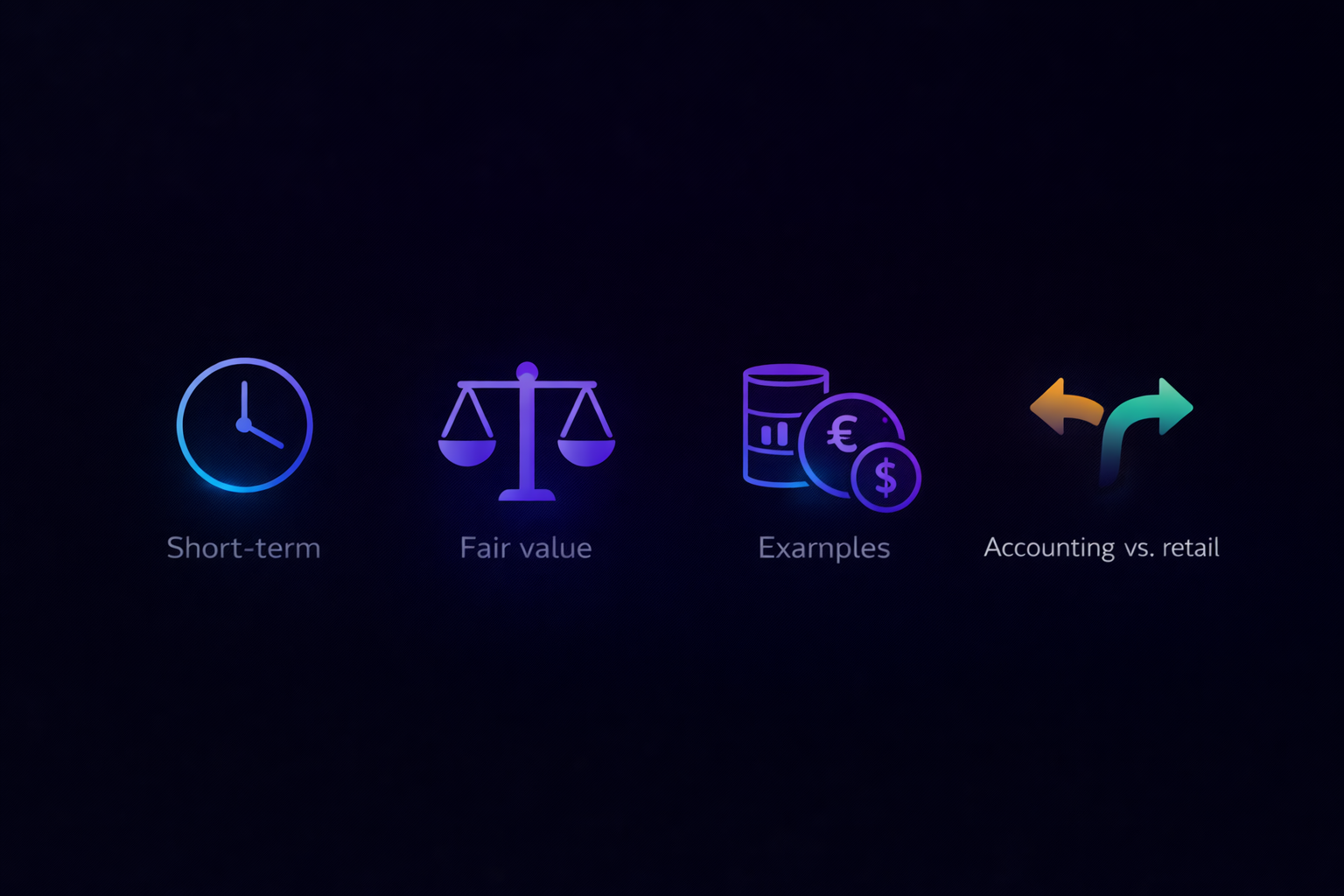
What are trading assets?
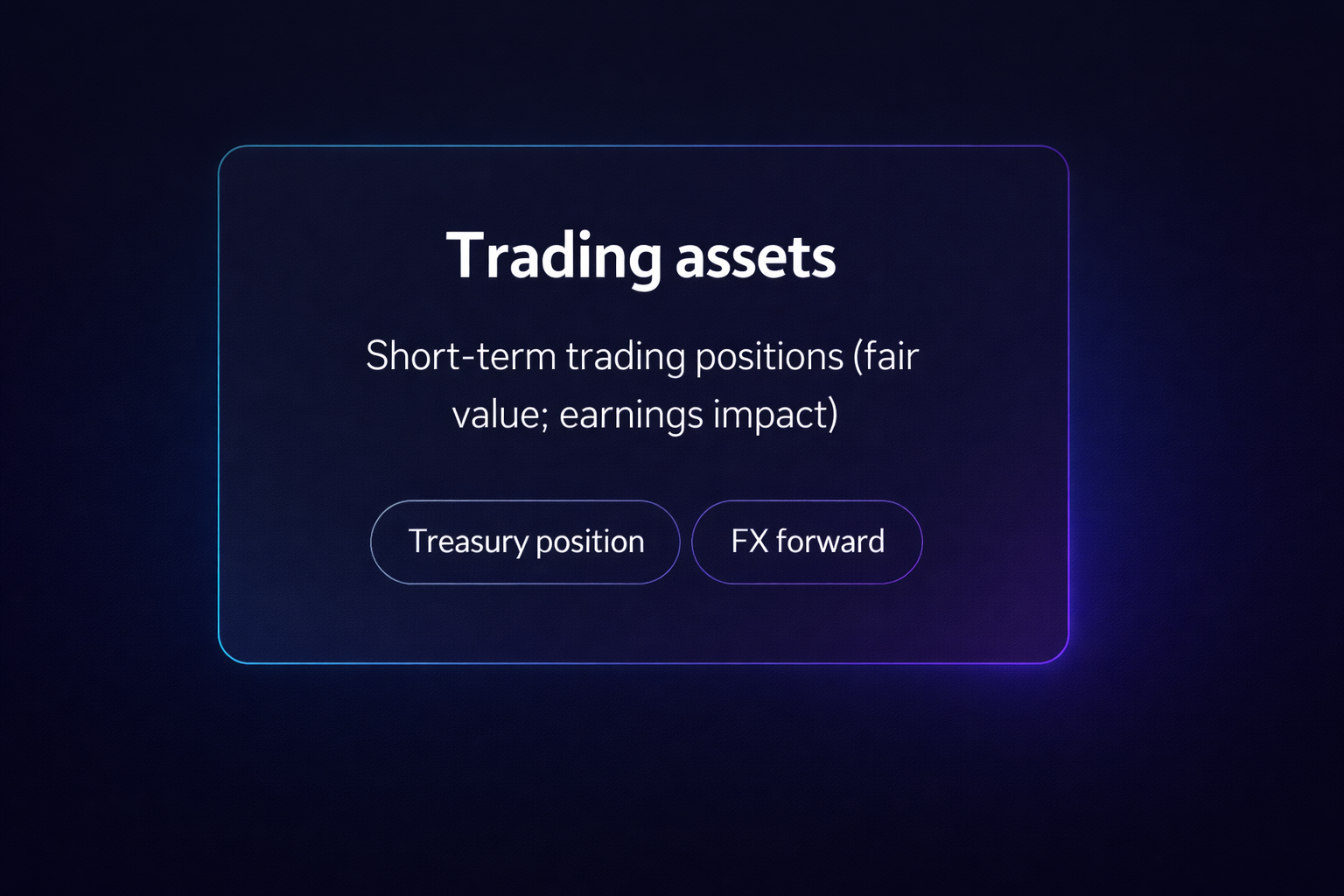
Trading assets are financial instruments a firm holds primarily to benefit from near-term price movements rather than to earn long-term income or hold to maturity.
In other words, the intent is short-term: the firm expects to actively manage, reprice, and potentially sell these positions relatively quickly.
Because the intent is short-term resale or active trading, trading assets are often presented as current assets on a balance sheet. This classification aligns with the idea that these positions are part of day-to-day market activity rather than a long-horizon investment strategy.
You typically see trading assets on the balance sheets of banks, broker-dealers, and firms that operate trading desks because they are structured to take, manage, and hedge market positions as part of their business model.
Mini-example: A bank buys a block of Treasury securities to reposition exposure when rates move, and that position sits inside trading assets.
Trading assets vs. investment securities
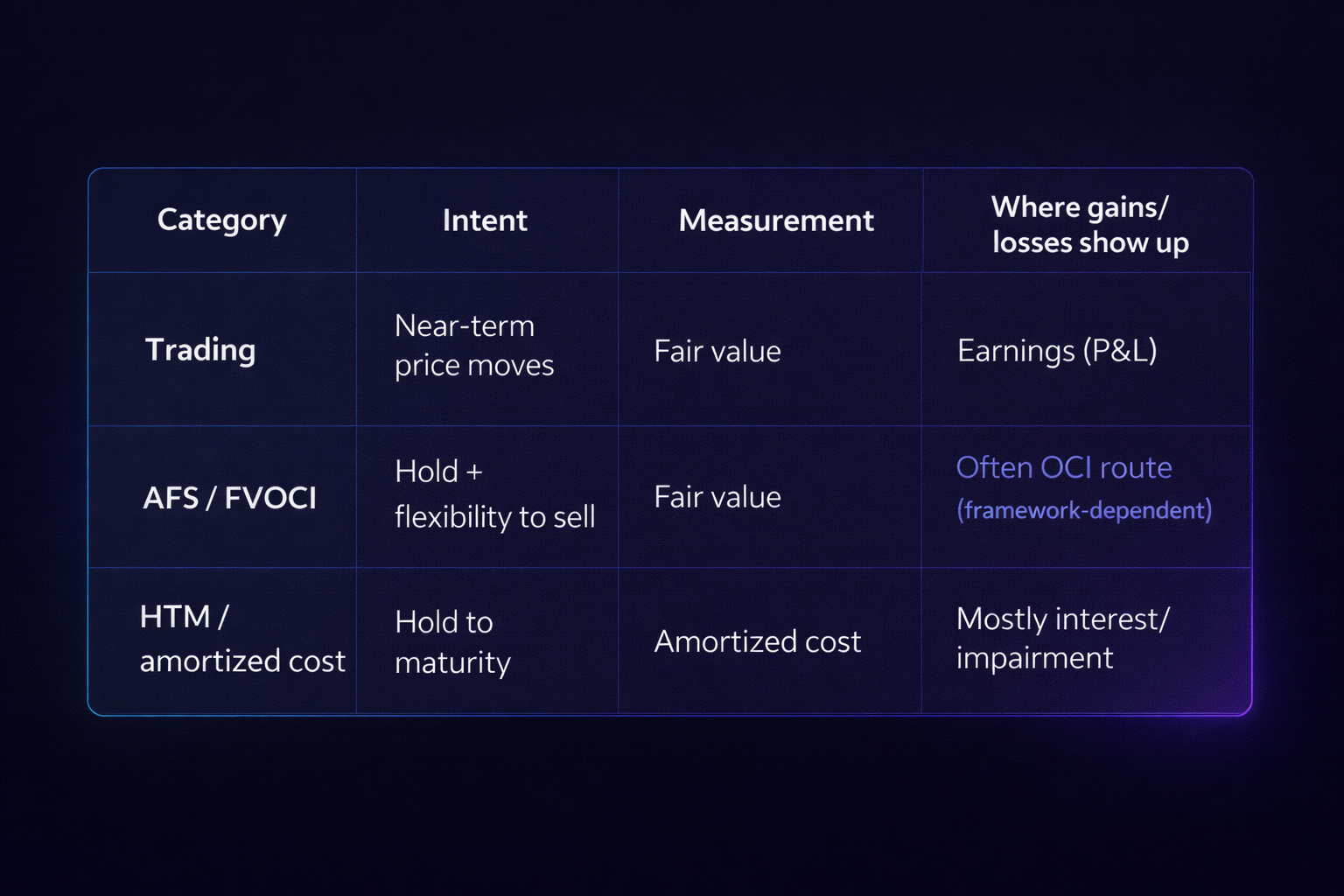
The label matters because it signals intent and influences how changes in value are reflected in financial reporting. Two portfolios can hold similar instruments, but if one is held to trade and the other is held to invest, the reporting treatment and the way performance shows up can look very different.
At a simple level, firms usually separate instruments into three broad buckets. Trading positions are managed for short-term outcomes and are typically revalued frequently, with changes flowing through earnings. Available-for-sale or fair-value-through-OCI categories sit in the middle and may route some value changes differently depending on the reporting framework and the nature of the instrument. Held-to-maturity or amortized cost categories are for instruments the firm intends (and is able) to hold over a longer horizon, where the reporting focus is more on interest income and credit risk than day-to-day price swings.
Transfers into or out of “trading” are generally not something firms do casually because the classification signals strategy and can change how reported performance behaves. At a high level, the market expects consistency in how positions are labeled and managed.
Common examples of trading assets
Trading assets become much easier to understand when you picture what actually sits inside the bucket.
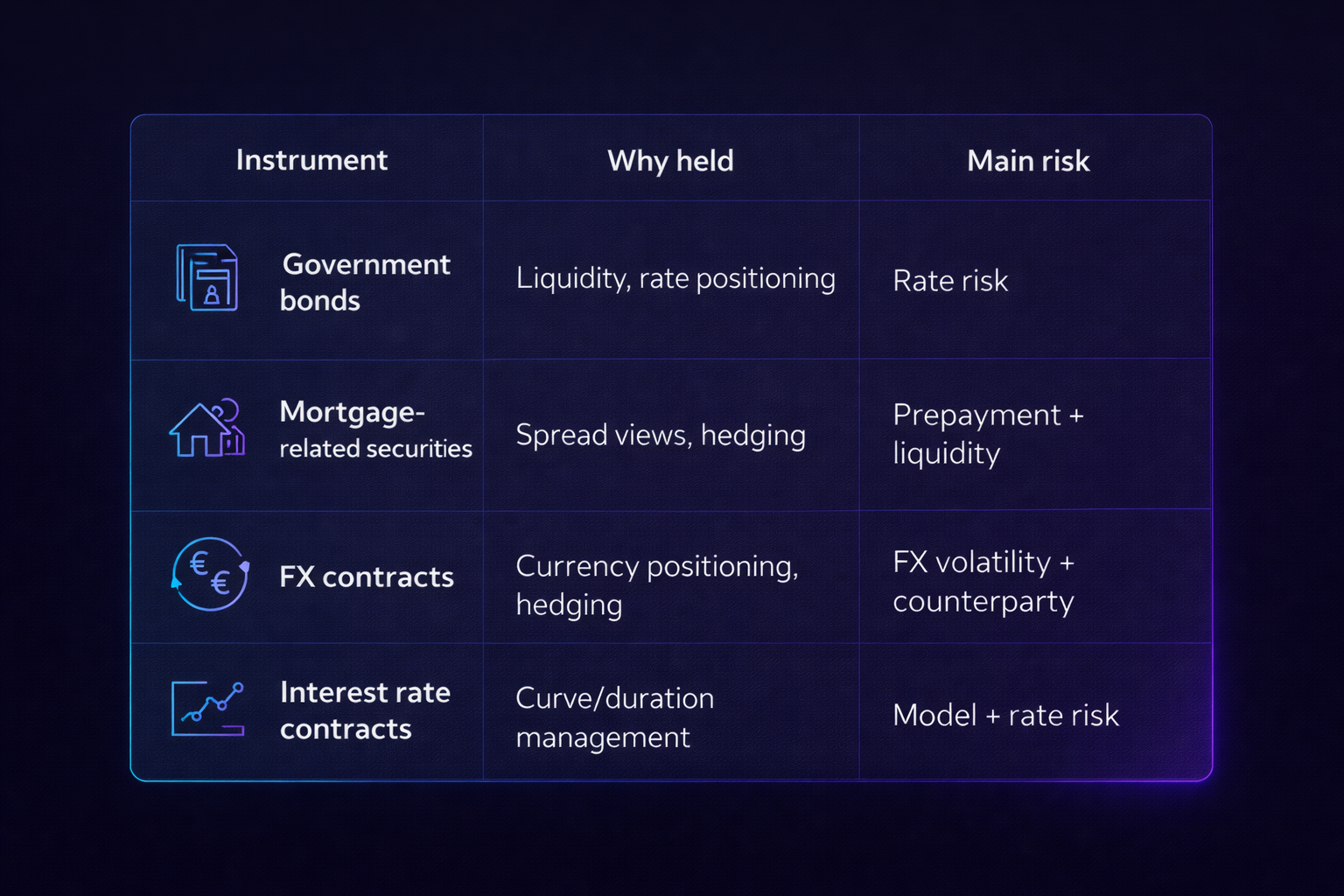
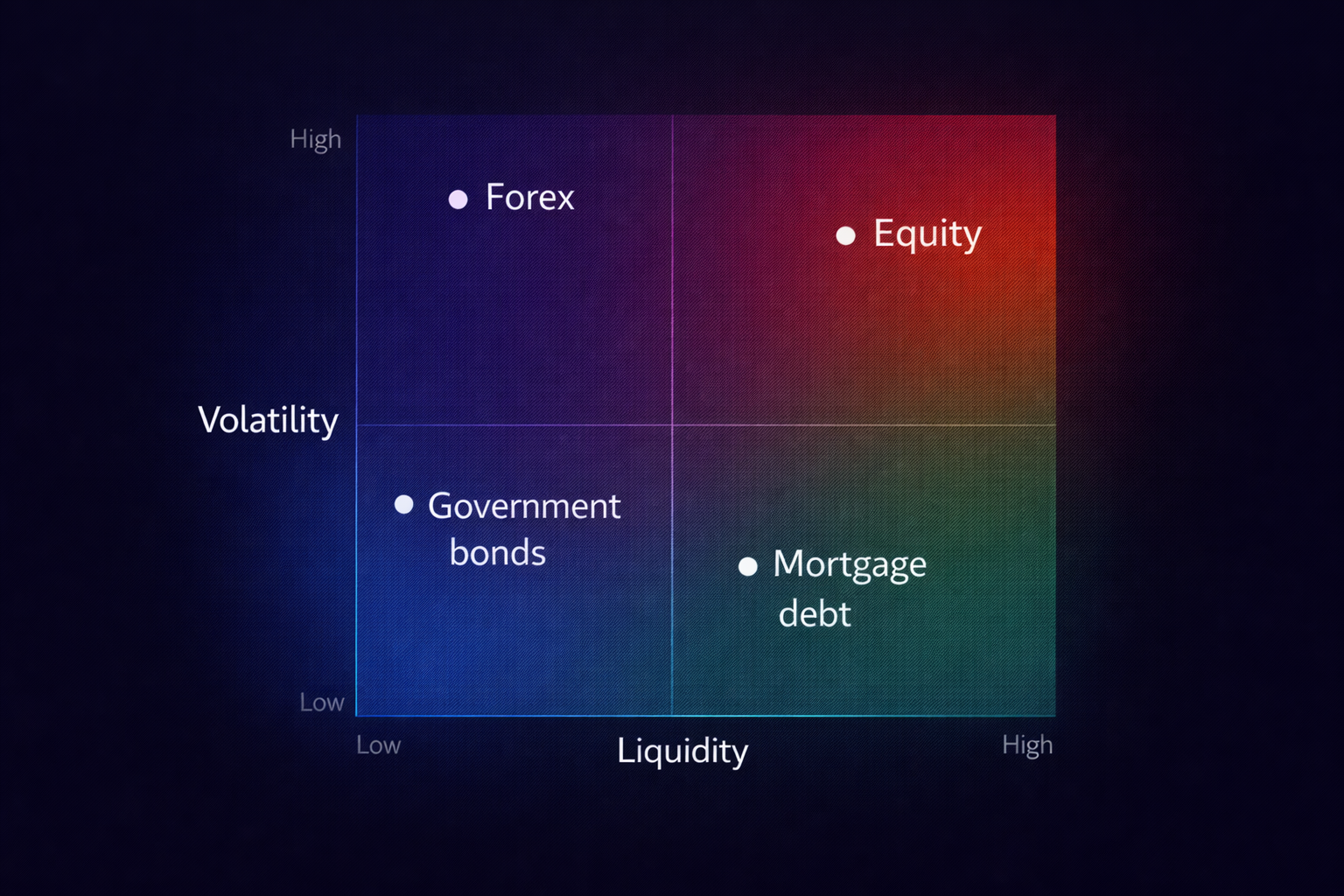
Institutions often hold highly liquid government securities because they can scale positions quickly and adjust exposure with minimal friction. Mortgage-related securities also appear frequently, especially where firms trade rate exposure, spread relationships, or hedge pipeline risk. Derivatives tied to currencies and interest rates are also common because they allow precise positioning and hedging without always needing to move large cash positions.
Here are concrete examples you’ll often see referenced in practice: government bonds such as U.S. Treasuries, mortgage-backed or mortgage-related securities, FX contracts (such as forwards or swaps), and interest rate contracts (such as swaps, futures, or similar instruments).
These positions are held for reasons like liquidity, hedging client flow, capturing spreads, or expressing a short-term view on rates or currencies.
To make each example intuitive:
- Government bonds are traded because they’re liquid and rate-sensitive.
- Mortgage-related instruments are traded because spreads and prepayment dynamics can create opportunities (and risks).
- FX contracts are traded to express currency views or hedge international exposure.
- Interest rate contracts are traded to manage duration and curve exposure efficiently.
How trading assets are valued and reported?
Mark-to-market simply means the firm updates the value of the position based on current market conditions rather than sticking to the original purchase price.
If market pricing changes, the reported value of the position changes too.
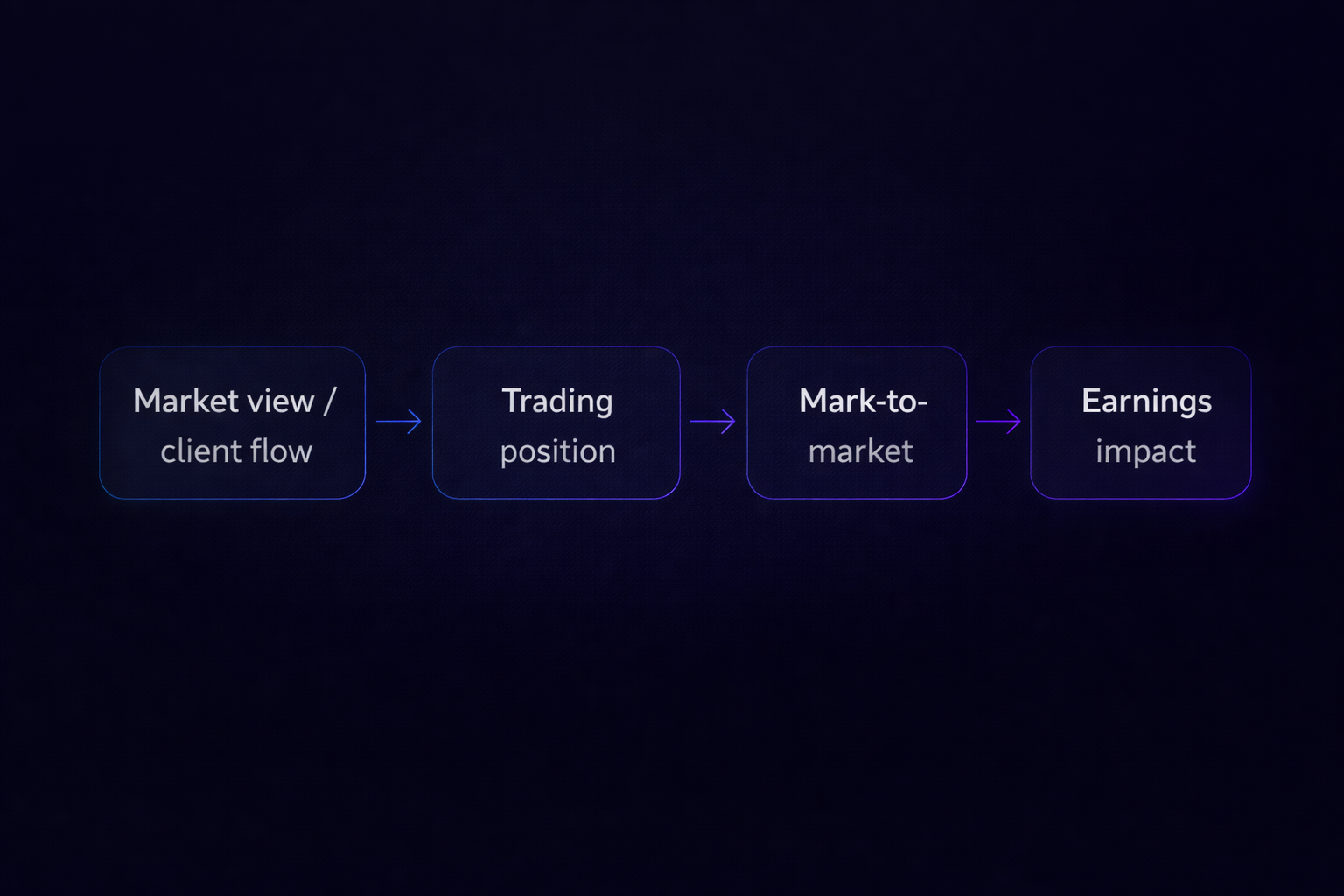
For trading assets, these changes typically affect earnings in the reporting period, even if the instrument hasn’t been sold yet. That’s the key reason trading-heavy institutions can show earnings that move around more than you might expect: the financial statements are reflecting day-to-day market repricing, not just realized profits from closed trades.
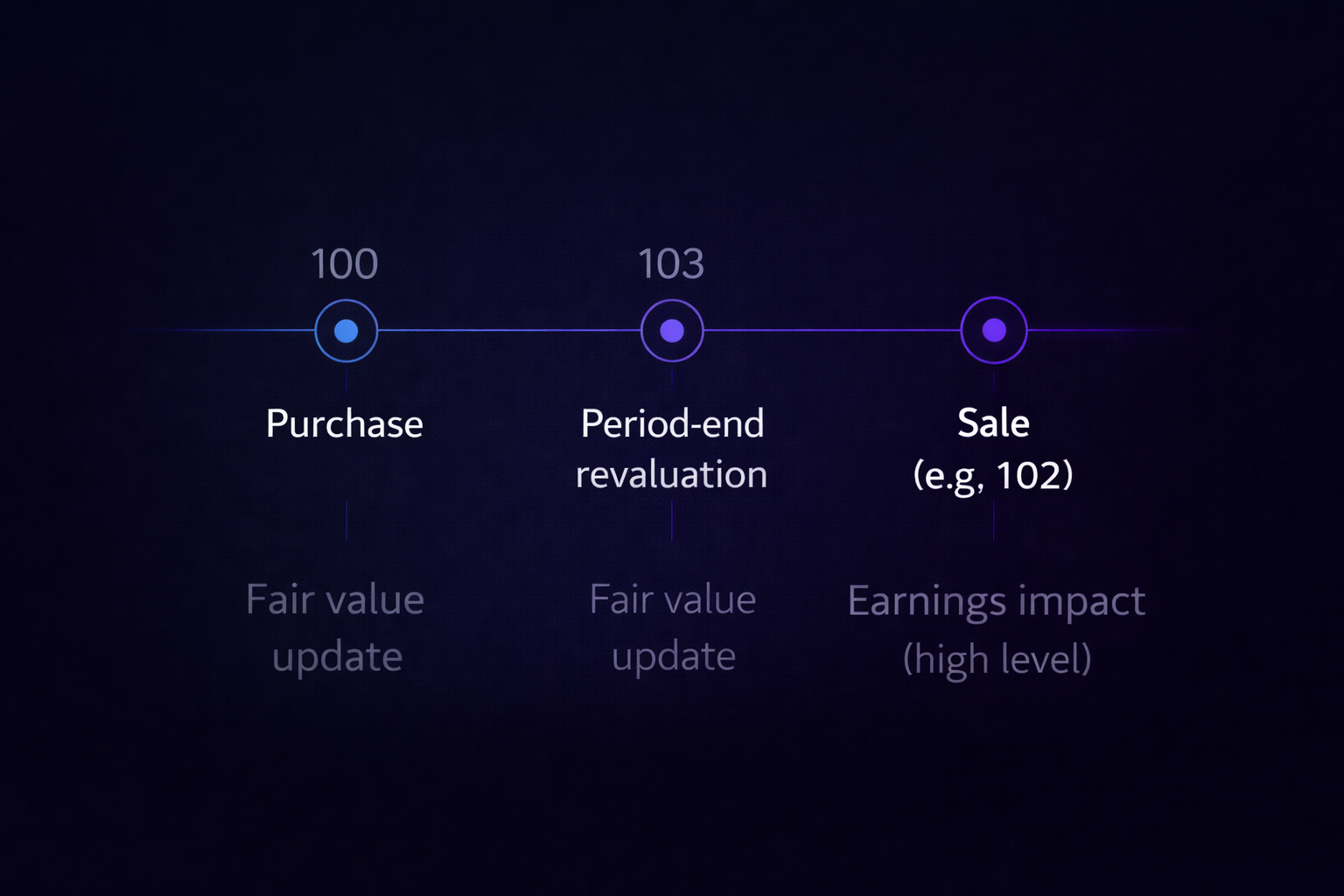
Concrete worked example: imagine an institution buys a bond at a price of 100.
At period end, market pricing implies the bond is worth 103. Even without selling it, the firm recognizes an unrealized gain of 3 because the asset is carried at current value. If the bond later moves down to 101, that shift also shows up as a change in value.
Why companies hold trading assets?
Institutions hold trading assets because they serve specific business functions.
Market-making is a major one: firms provide liquidity to clients by quoting buy/sell prices and holding inventory to facilitate trades.
Short-term profit opportunities are another: a desk may take a view on rates, spreads, or currencies based on research and positioning. Hedging is also central: trading positions can offset exposures that come from other parts of the business, such as lending, funding, or client activity.
There’s also a practical liquidity-management reason. Some firms want exposure they can adjust quickly if conditions change, and trading instruments, especially liquid ones allow that flexibility.
You’ll sometimes hear people refer to the “trading book” versus the “banking book.”
The trading book is managed for active repricing and risk limits, while the banking book is managed with longer-term holdings and business exposures in mind.
That distinction helps you understand why trading assets behave differently on reports.
Risks of trading assets (and how institutions control them)
Trading assets carry risks that can affect financial results quickly because values update frequently.
Market risk is the most obvious: rates, spreads, FX, and prices move, and trading positions move with them.
Liquidity risk is the risk that an asset can’t be sold quickly at a fair price, especially in stressed markets. Credit and counterparty risk matter when instruments depend on someone else’s ability to perform or when trading is done through counterparties.
Model risk becomes more relevant as instruments become less transparent and valuation relies more on assumptions than on observable market prices.
Regulators care about trading assets because losses can emerge quickly and because valuation quality matters most when markets are under pressure. Firms typically control these risks through position limits, hedges, scenario testing, governance frameworks, and independent valuation processes for less liquid instruments.
The point isn’t to eliminate risk, it’s to keep risk measurable and contained.
Important clarification: “Trading assets” vs “assets you trade”
This is where most confusion happens, so the distinction needs to be blunt. “Trading assets” in accounting is a balance-sheet label for short-term institutional positions. It describes how a firm classifies and reports instruments it actively manages and revalues.
“Assets you trade” in a retail context are the instruments available on a trading platform, what a trader can actually buy and sell. That includes categories like forex pairs, indices, commodities, metals, crypto products, and shares (depending on the broker and region).
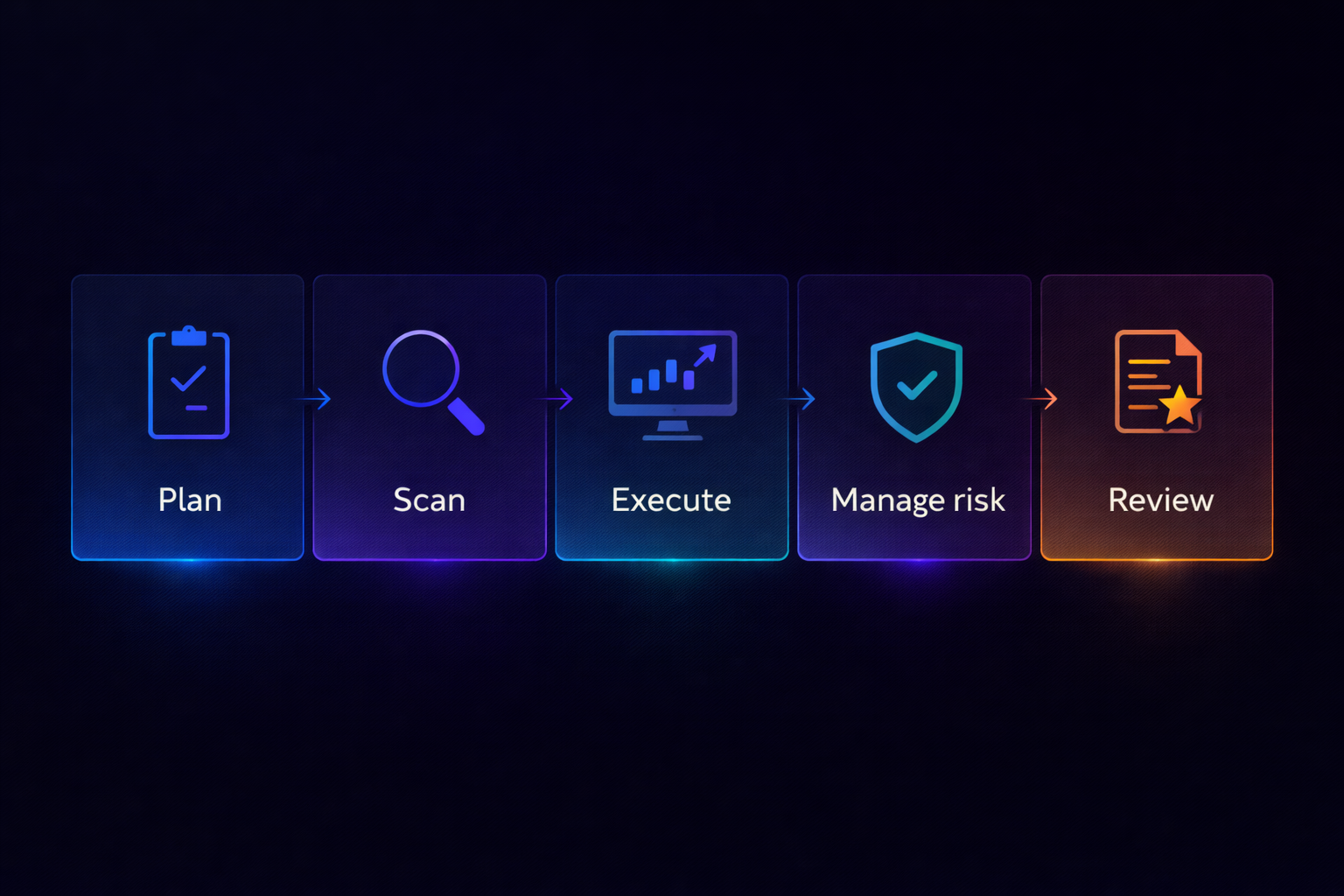
Asset trading, in the retail sense, simply means selecting an instrument, placing an order, and managing risk and exits according to a plan.
TradeLocker is built to make it easy to navigate and trade across a broad instrument list, with access to 500+ tradable assets depending on your broker connection.

Which asset is best for trading?
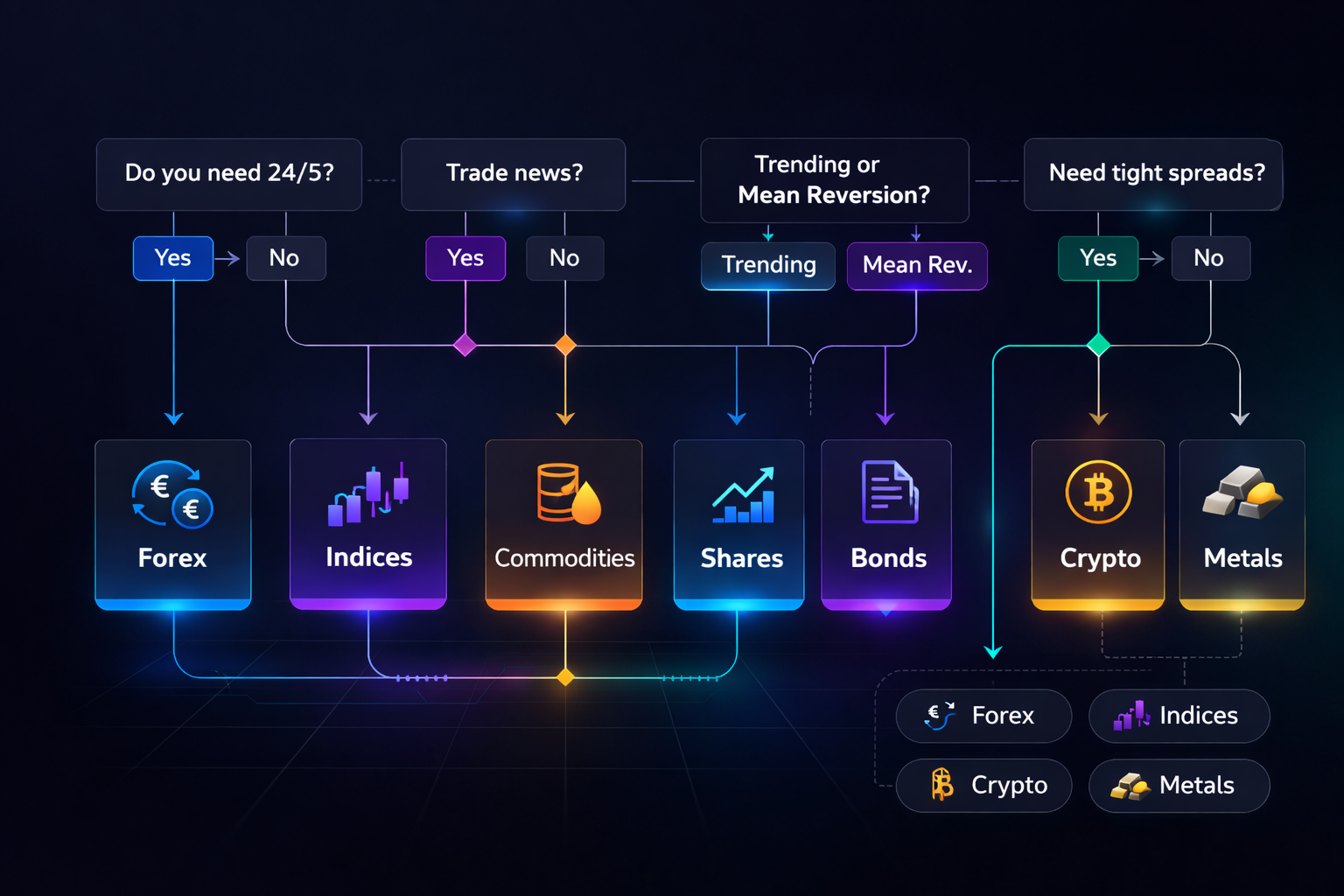
There isn’t a single “best” asset, there’s only best fit. The practical way to choose is to match the instrument to your constraints and strategy rather than chasing what’s trending.
Liquidity and spreads matter because they define friction.
If an instrument is expensive to enter and exit, your strategy needs larger moves to justify the cost. Volatility profile matters because it determines whether your targets and stops are realistic; some instruments are smooth and trend-friendly while others are jumpy and mean-reverting.
Trading hours matter because you need to be present when the instrument is active, not when it’s sleeping. News sensitivity matters because scheduled events can distort normal behavior.
Finally, strategy fit and time horizon matter because short-term systems, swing approaches, and position-style holds all interact differently with the same asset.
A beginner-safe way to reduce complexity is to start with liquid, widely followed instruments that tend to have tighter spreads and more predictable execution, without treating that as a promise of profitability.
What does an asset trader do?
An institutional asset trader’s job is primarily execution and risk control.
They execute trades (often connected to client flow), manage inventory, stay within limits, hedge exposures, monitor P&L, and report results and risk metrics. Their performance is heavily shaped by discipline, process, and risk governance, not by perfect prediction.
A retail trader’s responsibilities are similar in spirit but self-managed. A retail trader researches setups, places orders, manages risk with stops and position sizing, and reviews results with journaling and performance tracking.
In both settings, the “job” is to follow a risk process consistently under uncertainty.
What is the 2% rule in trading?
The 2% rule is a risk guideline that says you should not risk more than 2% of your total capital on a single trade.
The most common misunderstanding is thinking it’s about position size. It’s not.
It’s about the loss you would take if your stop loss is hit.
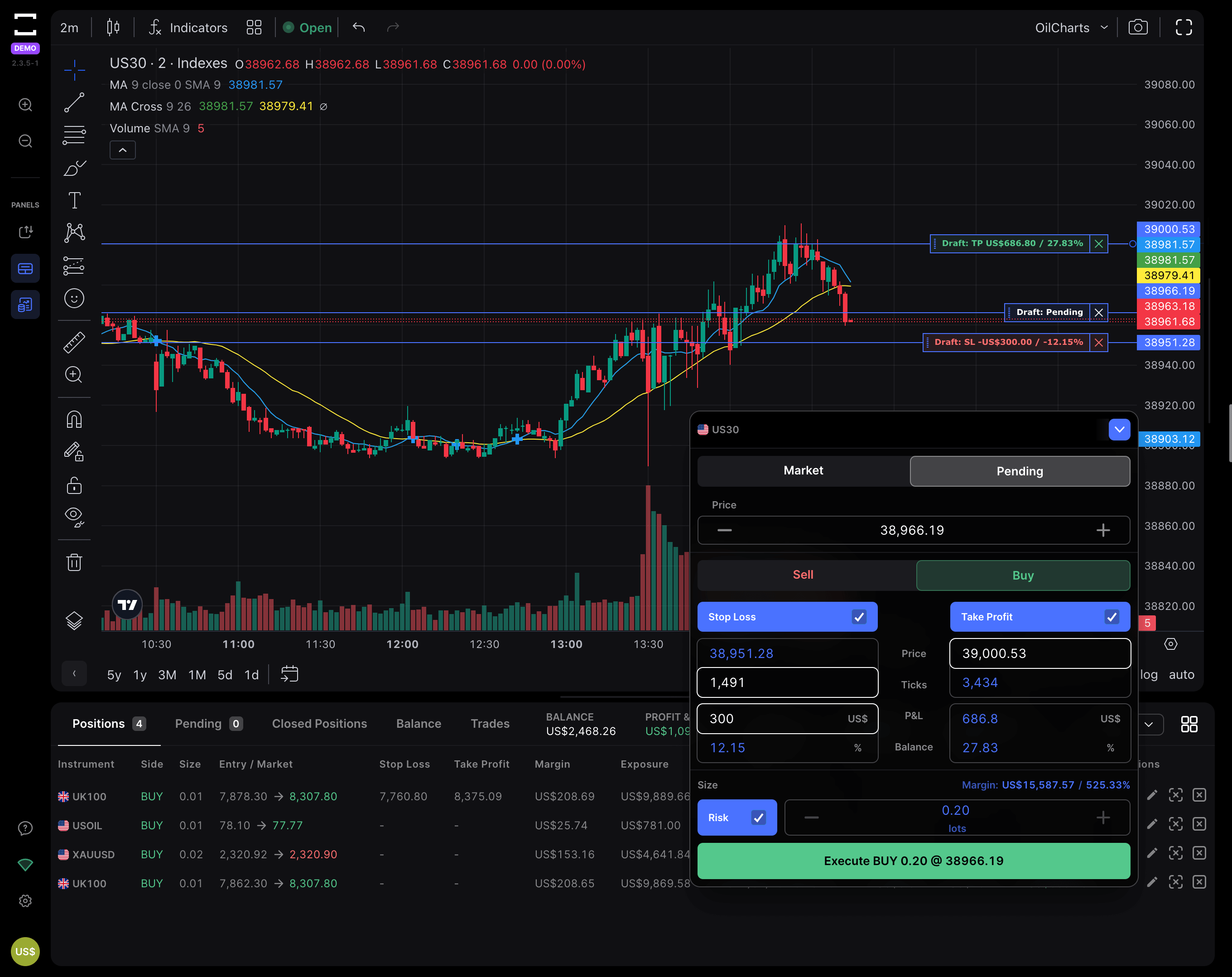
Worked example: if your account is $10,000, then 2% is $200. If your stop loss is placed far away, you must reduce position size to keep the maximum loss near $200. If your stop is tight, your position size can be larger while still respecting the same risk cap. This is how consistent traders keep single-trade losses from becoming account-level damage.
This is where TradeLocker’s order panel and risk calculator naturally help. It can auto-calculate position size based on your stop loss and the dollar amount (or percentage) you’re willing to risk, reducing manual math and sizing mistakes.
FAQ
- What is asset trading?
Asset trading is the act of buying and selling financial instruments to participate in price movement, typically with a defined plan for entries, exits, and risk control. - Which asset is best for trading?
The best asset is the one that matches your strategy, time horizon, schedule, and tolerance for volatility. - What does an asset trader do?
Institutional traders execute and manage risk within strict limits, while retail traders research setups, execute orders, manage risk, and review performance. In both cases, disciplined risk control matters more than being right on every move. - What is the 2% rule in trading?
It’s a risk guideline that caps the maximum loss per trade at 2% of account equity. You calculate the dollar risk first, then set position size based on stop loss distance so a stop-out doesn’t exceed that cap. - Are trading assets the same as current assets?
Trading assets are often presented as current assets because they’re intended to be turned over quickly, but “current assets” is broader and includes many non-trading items like cash and receivables. - Why do trading assets make earnings more volatile?
Because they’re revalued frequently, and changes in fair value typically affect reported performance even before positions are sold. - What’s the difference between trading assets and held-to-maturity securities?
Trading assets are managed for short-term outcomes and repriced frequently, while held-to-maturity positions are managed with long-horizon intent where daily price changes are not the core story. - Do trading assets always use mark-to-market accounting?
As a practical rule, trading classifications are tied to fair value measurement and frequent repricing because that matches how trading desks manage positions. - What are “underlying assets” in derivatives?
The underlying asset is what a derivative’s value references, such as a currency pair, an interest rate, an index, or a commodity price. Even if you trade the derivative, your exposure comes from the underlying behavior.